
How to Convert Traffic With a Lead Generation Website
Traffic feels like progress.
More people visiting your website. More clicks from search. More views from social. More attention from ads.
But traffic by itself does not grow a business.
A visitor isn’t a lead. A lead isn’t an appointment. An appointment isn’t a customer. Each step has to be earned by the system behind your website.
That’s where many small businesses get stuck.
They work hard to get more people to the site, but once visitors arrive, the path forward is unclear. The headline is vague. The call-to-action is buried. The form asks too much. Follow-up is slow. Leads aren’t qualified. No one knows which channel produced the opportunity.
The result is frustrating.
The website gets traffic, but the business doesn’t get enough conversations from it.
A lead generation website is built to solve that problem. It doesn’t simply explain what your business does. It guides the right visitors toward the next step, captures their interest, sends them into a follow-up system, and helps turn attention into real opportunities.
At AVI Lead Gen, we believe a website should work as part of a complete lead generation system. Traffic matters, but only when your website is prepared to convert that traffic into leads, appointments, and customers.

What a Lead Generation Website Actually Does
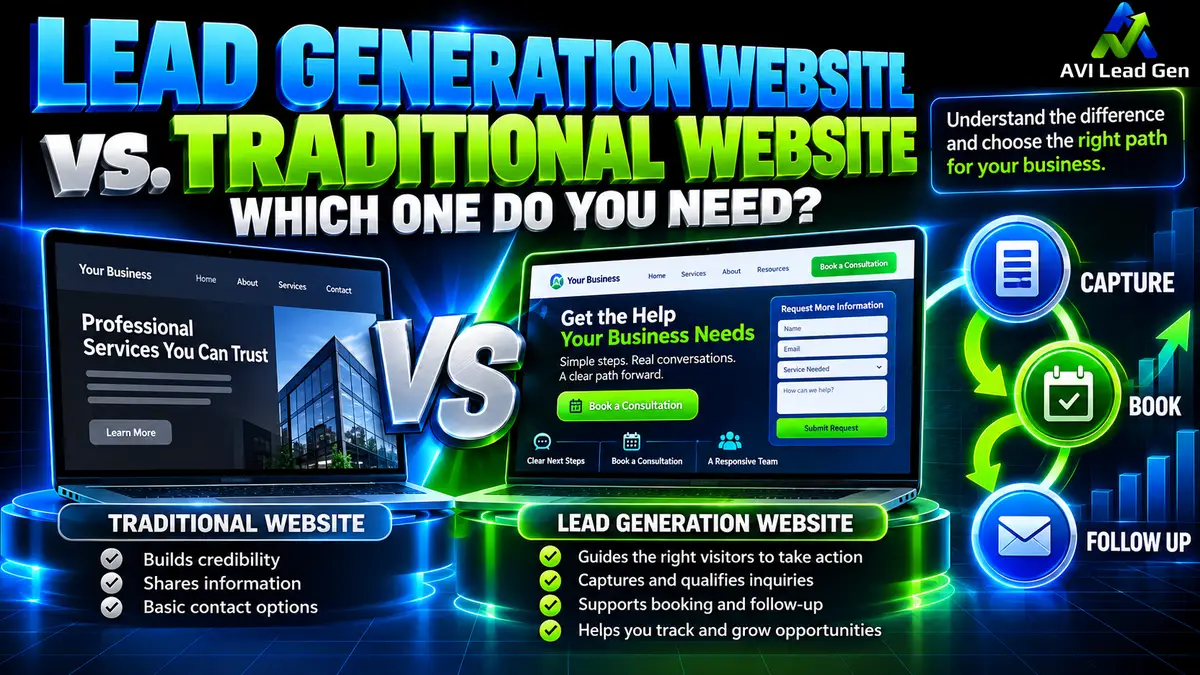
A traditional website usually acts like a digital brochure.
It tells people who you are, lists your services, shares contact information, and gives visitors a way to reach out if they are ready.
That is useful, but it’s not enough.
A lead generation website is built with a more specific job: move qualified visitors toward action.
That action might be booking a consultation, requesting a quote, downloading a guide, filling out a form, calling the business, or starting a conversation.
The difference isn’t only design.
It’s structure.
A lead generation website should help visitors quickly understand:
What problem you solve.
Who you help.
Why your solution matters.
What step they should take next.
What happens after they take that step.
If those answers aren’t clear, traffic can disappear without producing much value.
This is why understanding the difference between a lead generation website and a traditional website matters. A good-looking website may create a professional impression, but a lead generation website is built to create movement.
Traffic Is Only the First Step
Getting visitors to your website is important.
Without traffic, there’s no one to convert.
But traffic is only the first stage of the system.
The real question isn’t, “How many people visited the website?”
The better question is, “How many of the right people took the next step?”
A business may get traffic from search, social media, referrals, paid ads, email, or local listings. But each channel brings a different level of intent.
Someone searching for a specific service may be closer to buying. Someone reading an educational article may still be comparing options. Someone clicking from social media may be curious but not ready to book. Someone returning from a retargeting ad may already know the brand.
A lead generation website should respond to those different levels of intent.
High-intent visitors need a clear path to book, call, or request a quote. Earlier-stage visitors may need a helpful guide, checklist, article, or email sequence that keeps them engaged until they’re ready.
That’s why traffic strategy and website strategy have to work together.
If you’re attracting the wrong visitors, your website will struggle to convert them. If you’re attracting the right visitors but giving them an unclear path, you’ll still lose opportunities.
The Core Path: From Visitor to Customer
A lead generation website shouldn’t be solely judged by how it looks.
It should be judged by how well it moves people through the system.
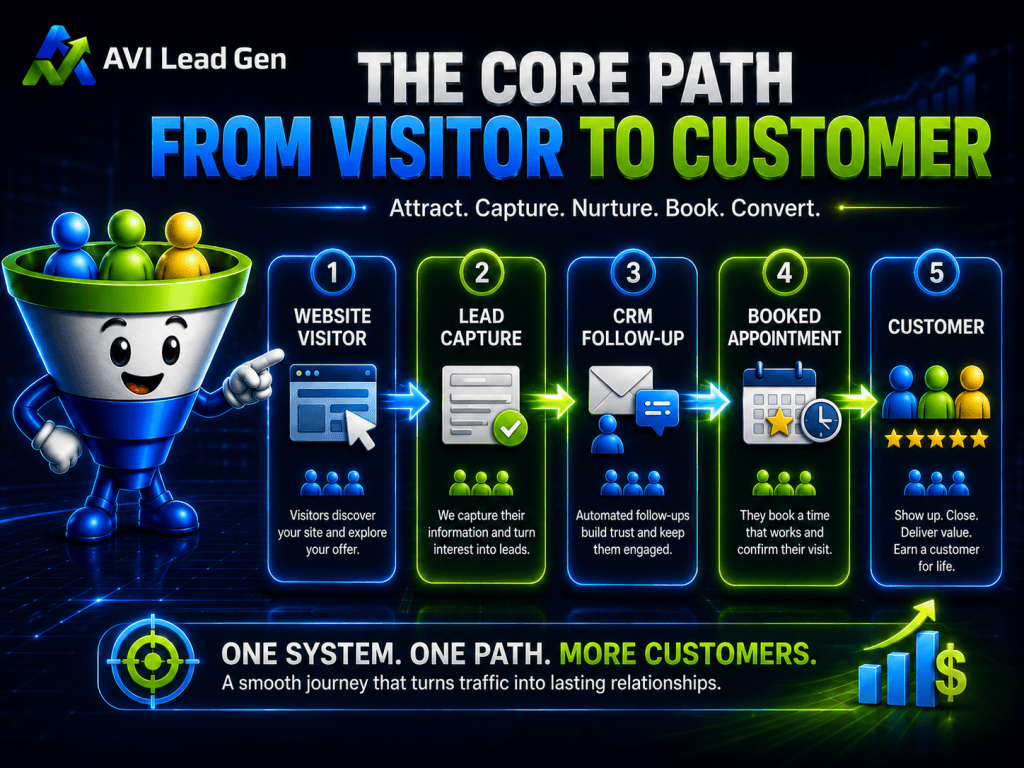
The basic path looks like this:
Visitor arrives.
Visitor understands the offer.
Visitor sees a clear next step.
Visitor fills out a form, books, calls, or downloads a resource.
Lead enters the CRM.
Follow-up happens quickly.
Lead is qualified.
Appointment is booked.
Sales conversation happens.
Customer decision is made.
Each step matters.
If one stage is weak, the whole system can underperform.
For example, traffic may be strong, but the website may not convert. The website may convert, but follow-up may be slow. Follow-up may happen, but the wrong people may be booking appointments. Appointments may happen, but the sales process may not close.
This is why lead generation isn’t just a website problem.
It’s a system problem.
A website sits near the center of that system, but it has to connect to lead capture, CRM automation, booking, follow-up, qualification, sales, and tracking.
A Realistic Example
Imagine a local service business getting 800 website visitors per month.
At first, that sounds promising.
But only 6 people fill out the contact form. Of those 6, only 3 receive a response the same day. One books a call. None become customers.
The owner assumes the problem is traffic.
But after reviewing the system, the real issue is clearer.
The homepage headline is vague. The main service page has no strong call-to-action. The form is buried near the bottom of the page. There’s no confirmation email after submission. The business owner responds manually whenever there’s time. No one tracks where the leads came from. There’s no booking link. There are no qualification questions.
In this situation, more traffic wouldn’t fix the main problem.
It would send more people into the same weak conversion path.
A better first move would be to improve the website message, make the call-to-action obvious, simplify the form, add automated confirmation, notify the business immediately, connect the lead to a CRM, and create a clear booking path.
Traffic matters.
But traffic becomes more valuable when the system is ready for it.

The Steps to Conversion With a Lead Generation System
Converting traffic isn’t about one page, one form, or one button.
It takes a connected lead generation system.
The website creates clarity. The call-to-action creates movement. The form or booking path captures interest. The CRM organizes the lead. Follow-up keeps the opportunity alive. Qualification protects your time. Tracking shows what is working and what needs to improve.
When those pieces are disconnected, traffic can leak out of the system before it ever becomes a real opportunity.
That’s why the goal isn’t simply to get more visitors.
The goal is to guide the right visitors through a clear conversion path:
Visitor becomes aware.
Visitor understands the offer.
Visitor takes action.
Lead is captured.
Lead enters the CRM.
Follow-up happens quickly.
Lead is qualified.
Appointment is booked.
Sales conversation happens.
Customer decision is made.
Each step supports the next one.
If the message is unclear, visitors may leave. If the form is difficult, interested prospects may stop. If follow-up is slow, leads may go cold. If qualification is weak, the wrong people may fill the calendar. If tracking is missing, you may not know where the system is breaking down.
That’s why a lead generation website should be built as part of a larger system, not as a standalone marketing asset.
The steps below walk through how to turn website traffic into leads, appointments, and customers by improving each part of the conversion path.

Step 1: Make the Message Clear
Visitors shouldn’t have to work hard to understand your website.
Within a few seconds, they should know what you do, who you help, and why it matters.
A vague headline like “Helping Businesses Grow” may sound professional, but it doesn’t tell the visitor enough. A clearer headline speaks directly to the problem your best customers want solved.
For example:
“Bookkeeping Help for Contractors Who Need Cleaner Numbers and Better Cash Flow.”
That headline is more specific. It tells the visitor who the service is for and what kind of problem it helps solve.
A strong lead generation website should make the offer obvious before asking for action.
The visitor should be able to answer:
Is this for me?
Do they understand my problem?
Can they help?
What should I do next?
If the message is unclear, the conversion path starts weak.
This is one reason many lead generation websites fail to produce leads. The problem isn’t always traffic. Sometimes the website doesn’t create enough clarity for visitors to move forward.

Step 2: Match Each Page to One Clear Goal
Every important page should have a purpose.
A homepage may guide visitors toward services, booking, or a primary offer. A service page may encourage a quote request or consultation. A blog article may educate the visitor and lead them toward a related next step. A landing page may focus on one specific offer.
The problem comes when a page tries to do too many things at once.
Multiple competing calls-to-action can create confusion. Long navigation paths can distract visitors. Generic “learn more” buttons can weaken urgency. Too many choices can cause people to do nothing.
A lead generation page should make the next step feel obvious.
That doesn’t mean every page needs the same call-to-action.
A high-intent service page might invite someone to book a consultation. A blog article might point to a guide or audit. A pricing-related page might push toward an application or strategy call.
The call-to-action should match the visitor’s intent.
When the page goal is clear, the visitor has less friction and the business has a better chance of capturing interest.

Step 3: Use Calls-to-Action That Create Momentum
A call-to-action isn’t just a button.
It’s the bridge between interest and action.
Weak CTAs often sound passive:
Contact Us.
Learn More.
Submit.
Get Started.
Those can work in some situations, but they’re often too vague to create momentum.
A stronger CTA tells the visitor what they are getting or what happens next.
For example:
Book a Free Consultation.
Request a Website Audit.
Get the Conversion Checklist.
Schedule Your Strategy Call.
See How the Full System Works.
The best CTA depends on the offer, the audience, and the page.
A visitor reading an educational article may not be ready to book immediately. A visitor on a service page may be closer to taking that step. A visitor comparing options may need a clearer explanation of the process before committing.
Your CTA should reduce uncertainty.
Don’t make people wonder what happens when they click.
Tell them.
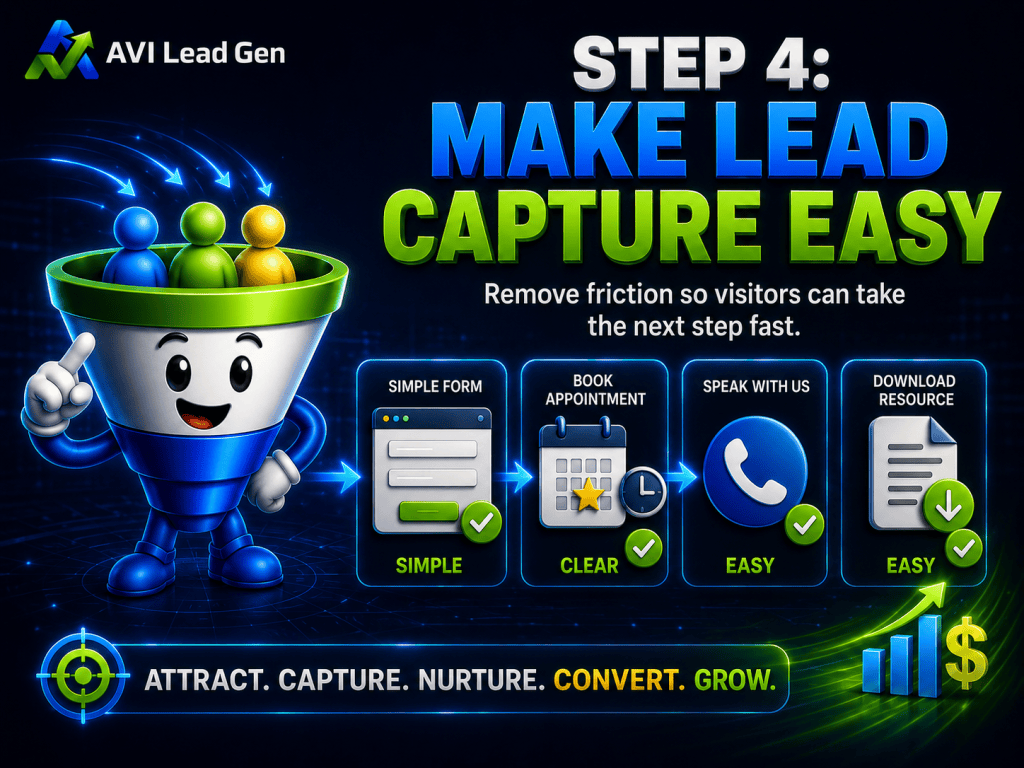
Step 4: Make Lead Capture Easy
Once someone is interested, the website should make it easy to become a lead.
That sounds obvious, but many websites create unnecessary friction.
Forms are too long. Buttons are hard to find. Booking links are buried. Contact options are limited. Mobile forms are awkward. Visitors are asked for too much information before they trust the business.
A good lead capture process balances two needs:
It should be easy enough for visitors to complete.
It should collect enough information to support useful follow-up.
For many businesses, name, email, phone, service interest, and one qualifying question may be enough to start. For higher-ticket or more complex services, additional questions may help with routing and qualification.
The key is to avoid asking for information you don’t need yet.
Lead capture can include:
Contact forms.
Quote request forms.
Booking calendars.
Lead magnets.
Newsletter forms.
Popups.
Chat or support widgets.
Click-to-call buttons.
The right mix depends on the business.
But the principle stays the same: make the next step easy to find, easy to understand, and easy to complete.
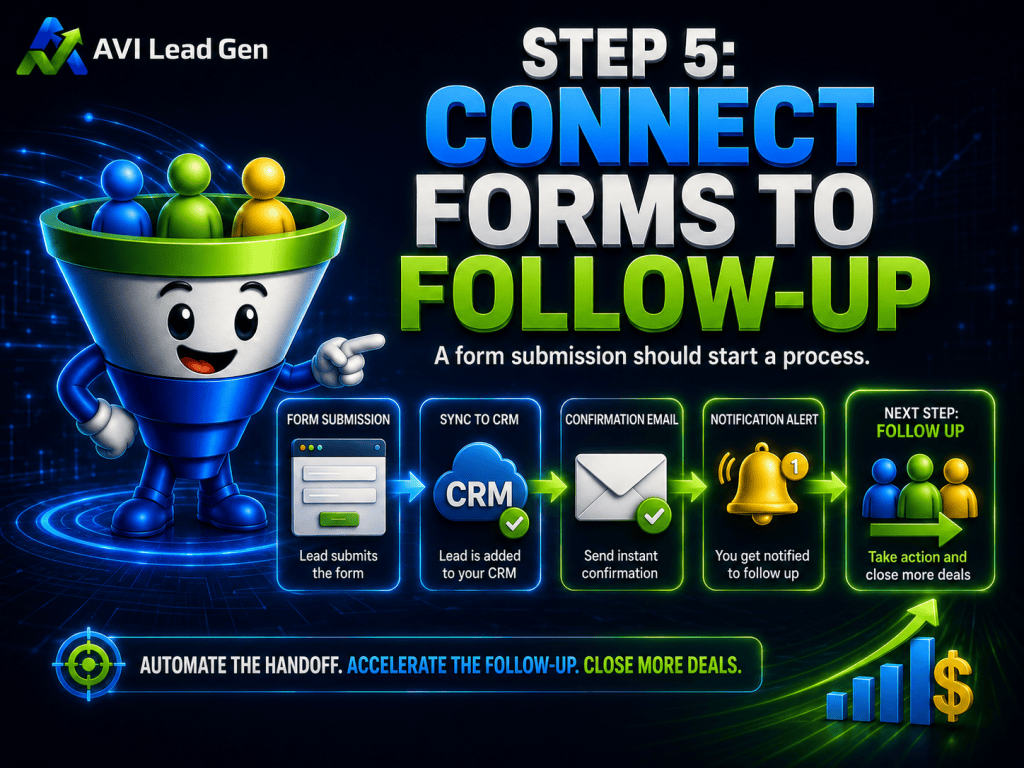
Step 5: Connect Forms to Follow-Up
The form submission isn’t the finish line.
It’s the beginning of the follow-up process.
This is one of the most important shifts in thinking for small businesses. A lead generation website shouldn’t simply collect inquiries and send them to an inbox. It should start a process.
When someone fills out a form, several things should happen quickly:
The lead should receive a confirmation.
The business should receive an alert.
The contact should enter the CRM.
The source should be tracked when possible.
The next step should be clear.
Follow-up should happen fast.
Without that process, good leads can go cold.
A visitor may be interested when they submit the form, but if they do not hear back quickly, they may contact another business, lose urgency, or forget why they reached out.
This is why your website, forms, CRM, and follow-up automation should work together.
If your website captures a lead but no one follows up quickly, the system is still leaking opportunities.
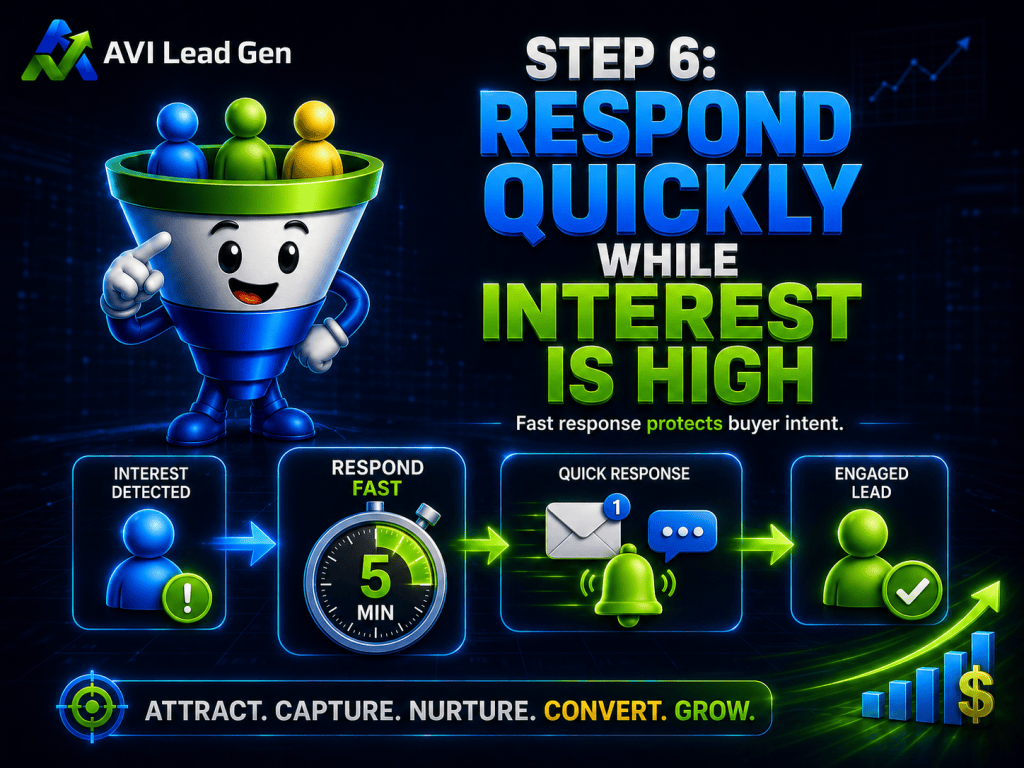
Step 6: Respond Quickly While Interest Is High
Speed matters because buyer intent has a short shelf life.
When someone reaches out, they’re usually trying to solve a problem. They may be comparing providers, checking availability, or looking for someone who can help soon.
If your business responds slowly, the lead may move on.
Fast response doesn’t mean every conversation has to close immediately. It means the lead should feel acknowledged, guided, and clear on the next step.
A strong response system may include:
An instant confirmation email.
A notification to the business.
A task inside the CRM.
A booking link.
A reminder if no one responds.
A follow-up sequence for leads who do not reply.
Automation helps here, but automation shouldn’t replace the human relationship. It should protect the opportunity until a real conversation can happen.
If traffic is coming in and leads are being captured, but conversations are not happening, response time may be the bottleneck.

Step 7: Qualify Leads Before They Consume the Calendar
More leads aren’t always better.
Better-fit leads are better.
A lead generation website should help separate serious opportunities from poor-fit inquiries. Without qualification, your business may spend too much time with people who aren’t ready, not a fit, outside your service area, looking for the wrong service, or shopping only for the lowest price.
Qualification doesn’t need to create a frustrating process.
It can be simple.
Ask the right question at the right time.
A form might ask about service interest, timeline, location, budget range, business type, urgency, or the problem the visitor is trying to solve. A booking flow might route leads differently based on their answers. A CRM can tag contacts by fit, intent, or service need.
The goal isn’t to block people.
The goal is to guide them correctly.
High-fit leads should get a clear path to book. Early-stage leads may need nurture. Poor-fit leads may need a polite alternative.
When qualification improves, follow-up and sales conversations improve too.
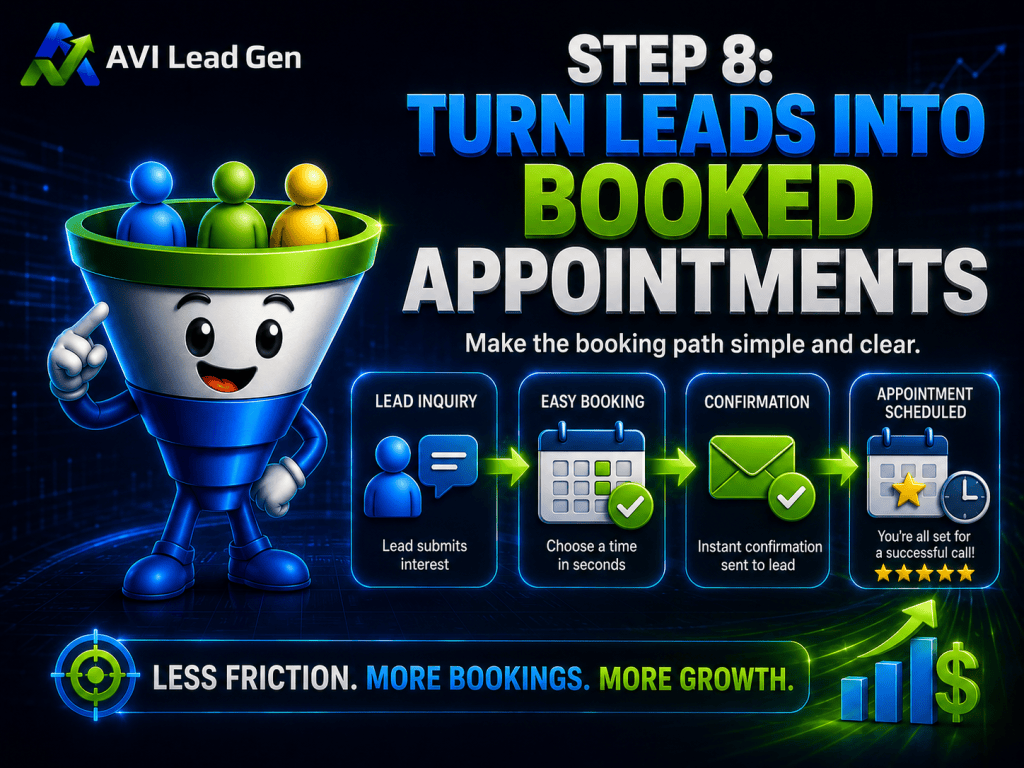
Step 8: Turn Leads Into Booked Appointments
For many service businesses, a lead is valuable only if it becomes a conversation.
That’s why booking matters.
A visitor may submit a form, but if the next step is unclear, momentum can fade. A lead may be interested, but if scheduling requires back-and-forth emails, the process can stall.
A clear booking path helps reduce friction.
That might include a calendar on the website, a booking link in the confirmation email, reminders before the appointment, and a no-show follow-up process.
The booking experience should answer basic questions:
What is this call for?
How long will it take?
Who will I speak with?
What should I expect?
What happens after the call?
When people know what to expect, booking feels safer.
If your website is generating leads but not appointments, the problem may be the transition between lead capture and scheduling.
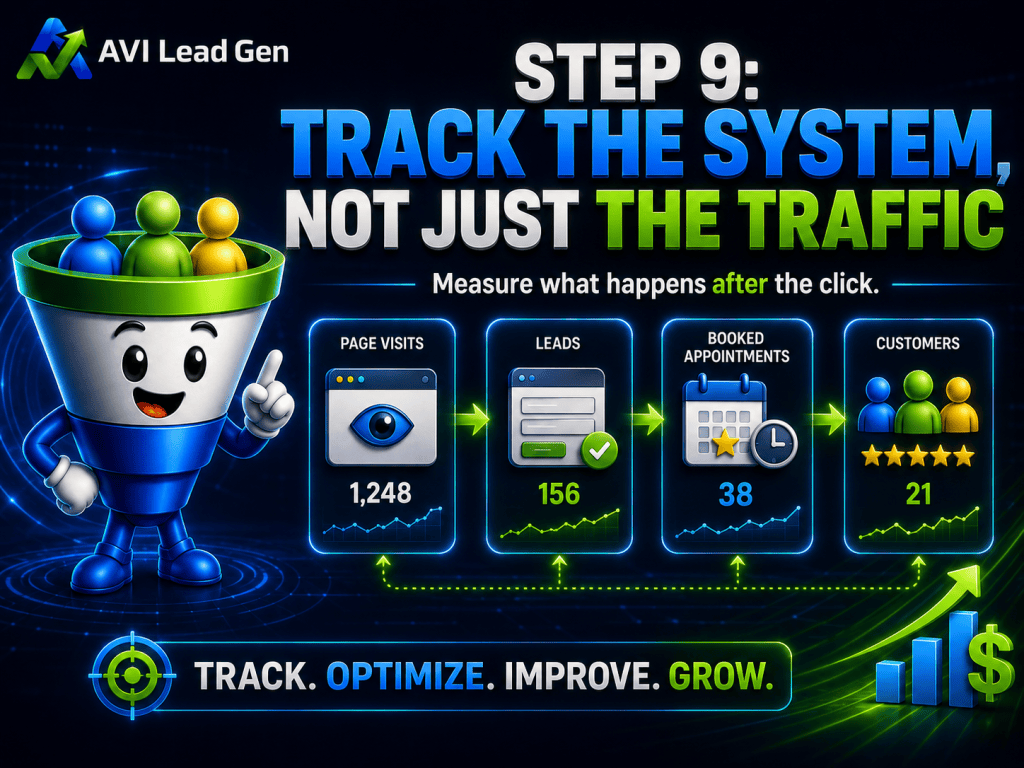
Step 9: Track the System, Not Just the Traffic
A lead generation website should be measurable.
But the mistake many businesses make is tracking only surface-level numbers.
Page views matter. Traffic sources matter. Clicks matter.
But they don’t tell the full story.
You also need to understand what happens after people arrive.
Track questions like:
Which pages generate leads?
Which calls-to-action get clicked?
Which forms convert?
Which traffic sources produce qualified leads?
How fast does follow-up happen?
How many leads book appointments?
How many appointments become customers?
Which channels produce real revenue opportunities?
This is where traffic becomes more meaningful.
A traffic source with fewer visitors may be more valuable than a high-traffic source if it produces better leads. A blog post may not create immediate bookings, but it may support trust before someone returns later. A service page may need conversion improvements if visitors arrive but don’t act.
Tracking helps you stop guessing.
It shows where the system is working and where opportunities are getting stuck.
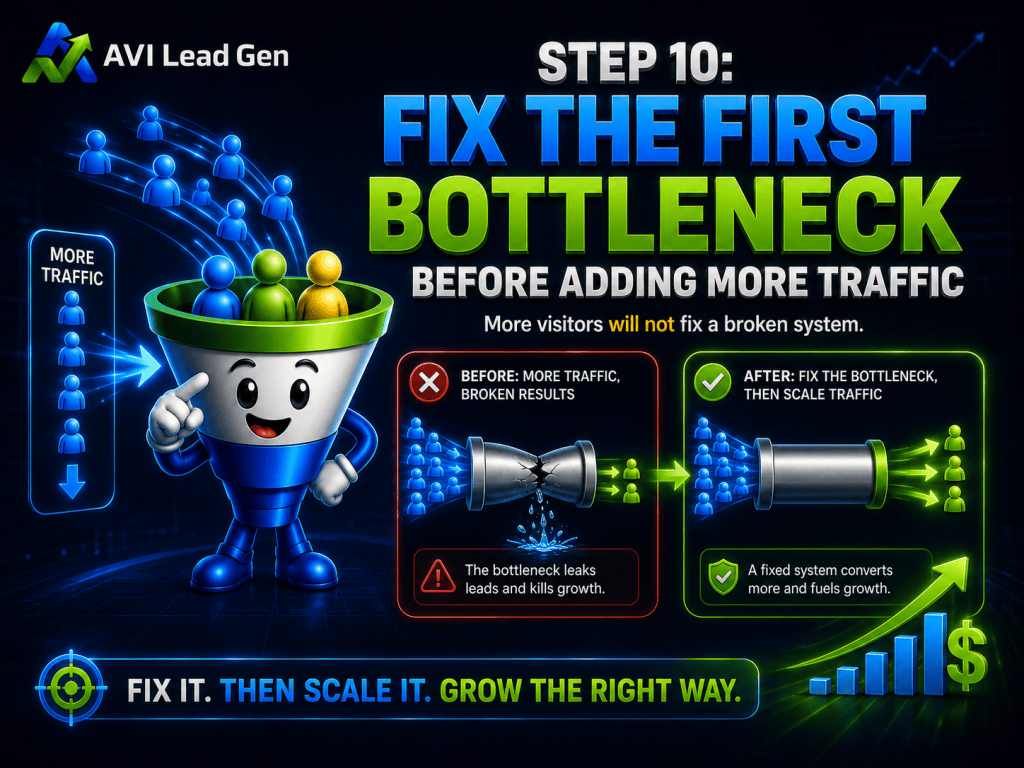
Step 10: Fix the First Bottleneck Before Adding More Traffic
Once you can see the system, the next step is deciding what to fix first.
This is where many businesses make an expensive mistake.
They assume the answer is more traffic.
Sometimes it is.
But if your current traffic is not converting, adding more visitors may only create more waste. If leads are coming in but follow-up is slow, more leads may create more missed opportunities. If appointments are happening but not closing, more traffic may not solve the sales problem.
The smarter move is to find the first bottleneck.
Ask:
Are the right people visiting?
Are they taking action?
Are leads being captured?
Is follow-up fast?
Are leads qualified?
Are appointments being booked?
Are appointments turning into customers?
The first major drop-off usually shows where to focus.
If you’re not sure where the issue is, a simple lead generation audit can help you identify the weak point before you spend more money on traffic, ads, or redesigns.
Once you know the weak point, the next step is deciding which lead generation system issue to fix first.
Common Mistakes That Keep Traffic From Converting
Most website traffic conversion problems aren’t caused by one huge failure.
They’re usually caused by several small gaps working together.
Common issues include:
A vague headline.
Too many calls-to-action.
No clear offer.
Buried forms.
Long or confusing forms.
No mobile-friendly conversion path.
No confirmation after submission.
Slow follow-up.
No CRM connection.
No lead source tracking.
No booking process.
No qualification questions.
No follow-up sequence.
No measurement beyond traffic.
Each issue may seem small by itself.
But together, they can prevent a website from turning visitors into real opportunities.
That’s why a lead generation website should be built as a connected system, not just a collection of pages.

How Long Does Website Traffic Conversion Take?
Some leads can come in quickly after a website launches, especially if traffic already exists.
But consistent lead generation usually takes time.
Search visibility may take time to build. Paid campaigns may need testing. Website pages may need refinement. Calls-to-action may need adjustment. Follow-up processes may need improvement. Tracking may reveal bottlenecks that weren’t obvious at launch.
The better question is not only, “How long will this take?”
The better question is, “Is the system improving?”
You want to see signs that the system is moving in the right direction:
More qualified visitors.
Better page engagement.
More form submissions.
Faster follow-up.
More booked appointments.
Better close rates.
Clearer source tracking.
Lead generation isn’t usually one big switch.
It’s a process of building, measuring, and improving the path from visitor to customer.
The Bottom Line
Traffic is important.
But that alone won’t grow your business if you can’t convert traffic into leads.
A lead generation website turns traffic into opportunity by giving visitors a clear message, a clear next step, a simple lead capture path, fast follow-up, better qualification, and a measurable process.
The goal isn’t just to get more people to the website.
The goal is to help the right people move forward.
That’s why your website shouldn’t work alone. It should connect to your CRM, booking system, automation, follow-up process, tracking, and sales workflow.
When those pieces work together, traffic becomes more valuable.
Visitors become leads. Leads become conversations. Conversations become appointments. Appointments become customers.
That’s what a lead generation website is supposed to do.
Ready to Turn Website Traffic Into Real Opportunities?
If your website gets traffic but doesn’t produce enough leads, or if leads are coming in but not turning into appointments and customers, we can help you build a clearer system.
Ready to stop guessing and build a lead generation system that works around the clock?
AVI Lead Gen helps small businesses capture leads, automate follow-up, and turn more website visitors into real opportunities.
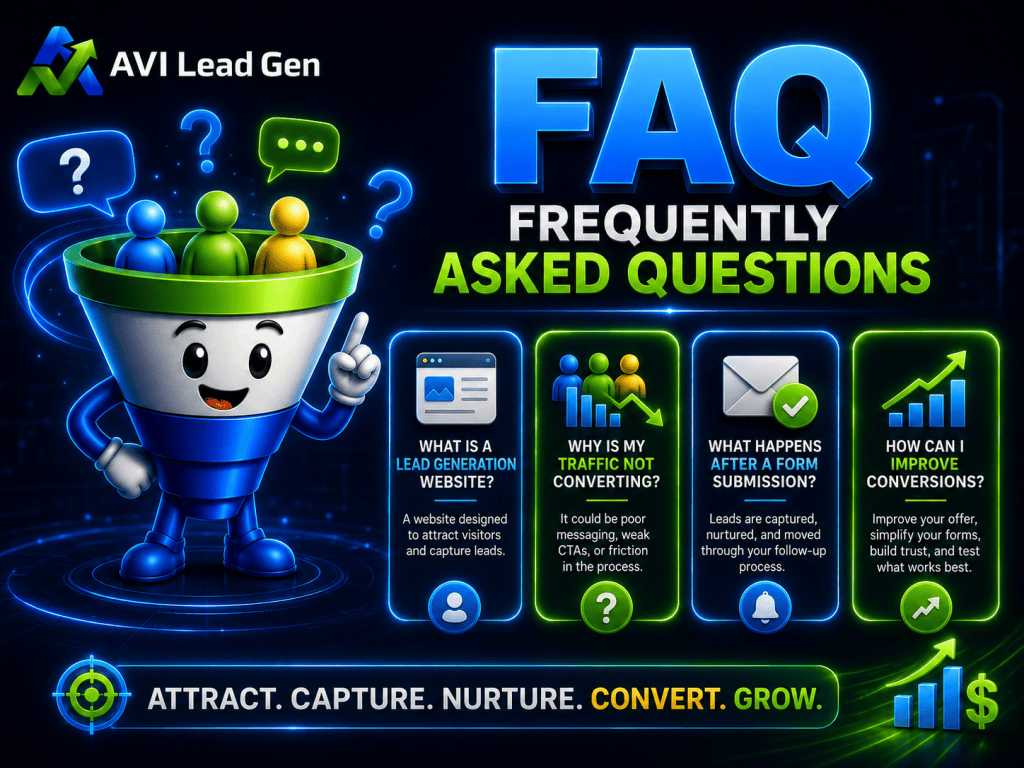
Frequently Asked Questions
What is a lead generation website?
A lead generation website is a website designed to turn visitors into leads, appointments, or sales opportunities. It combines clear messaging, strong calls-to-action, lead capture forms, booking paths, CRM integration, follow-up automation, and tracking.
How does a lead generation website convert traffic?
It converts traffic by guiding visitors toward a clear next step. That may include booking a consultation, requesting a quote, filling out a form, downloading a guide, or calling the business. The website should also connect captured leads to follow-up and tracking systems.
Why is my website getting traffic but not leads?
Your website may have unclear messaging, weak calls-to-action, buried forms, poor mobile layout, slow load times, no trust-building content, or a lead capture process that creates too much friction. The issue may also happen after the form if follow-up is slow or inconsistent.
Do I need paid ads to convert traffic into leads?
Not always. Paid ads can help increase traffic quickly, but they are not required for every business. SEO, referrals, local visibility, email, and social content can also bring visitors. The bigger issue is whether your website can convert the traffic you already have.
What should happen after someone fills out a form?
The lead should receive a clear confirmation, the business should be notified, the contact should enter the CRM, the source should be tracked when possible, and follow-up should happen quickly. A form submission should start a process, not sit in an inbox.
What is the biggest mistake businesses make with website traffic?
The biggest mistake is assuming more traffic will automatically create more customers. If the website does not convert, follow-up is slow, or the sales process is weak, more traffic may only create more missed opportunities.