
Getting more leads sounds like the goal.
Until your calendar fills up with people who aren’t serious, aren’t ready, can’t afford the service, or were never a good fit in the first place.
That’s when “more leads” starts creating more noise.
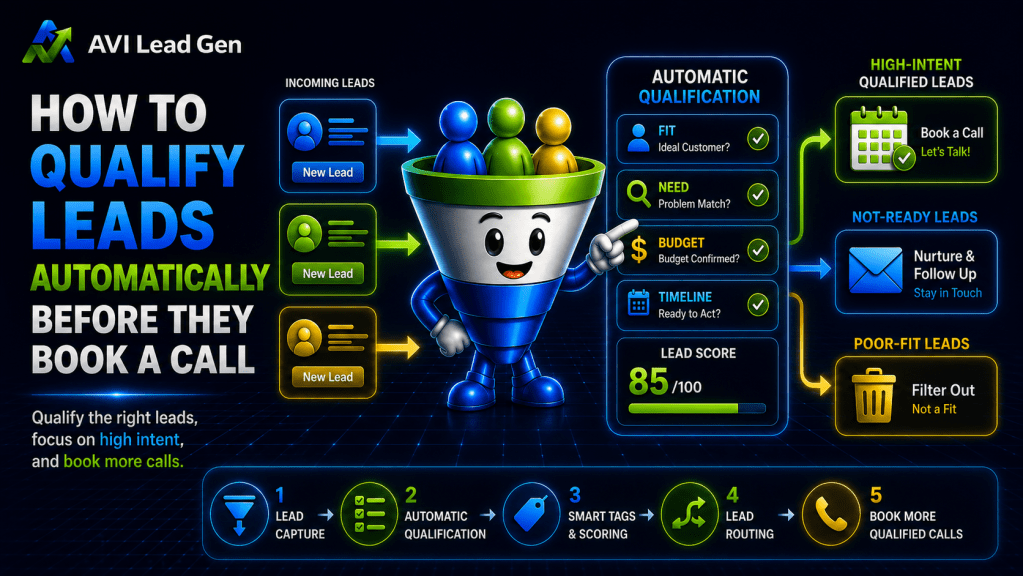
A lead generation system shouldn’t push every form submission straight to the calendar. It should help sort, qualify, and route leads before they book.
Some leads should schedule a call right away.
Some leads need more information first.
Some leads should be nurtured until they’re ready.
Some leads should be filtered out before they waste time on the calendar.
At AVI Lead Gen, we don’t look at lead qualification as a way to block people from talking to your business. We look at it as a way to give each lead the right next step.
The goal isn’t to make the process cold or complicated.
The goal is to help the right people move forward faster, while keeping poor-fit leads from clogging your sales process.
[Internal link: lead generation system → Lead Generation System for Small Businesses]
[Internal link: booked appointments → How to Turn Website Leads Into Booked Appointments]
More Leads Aren’t Always Better
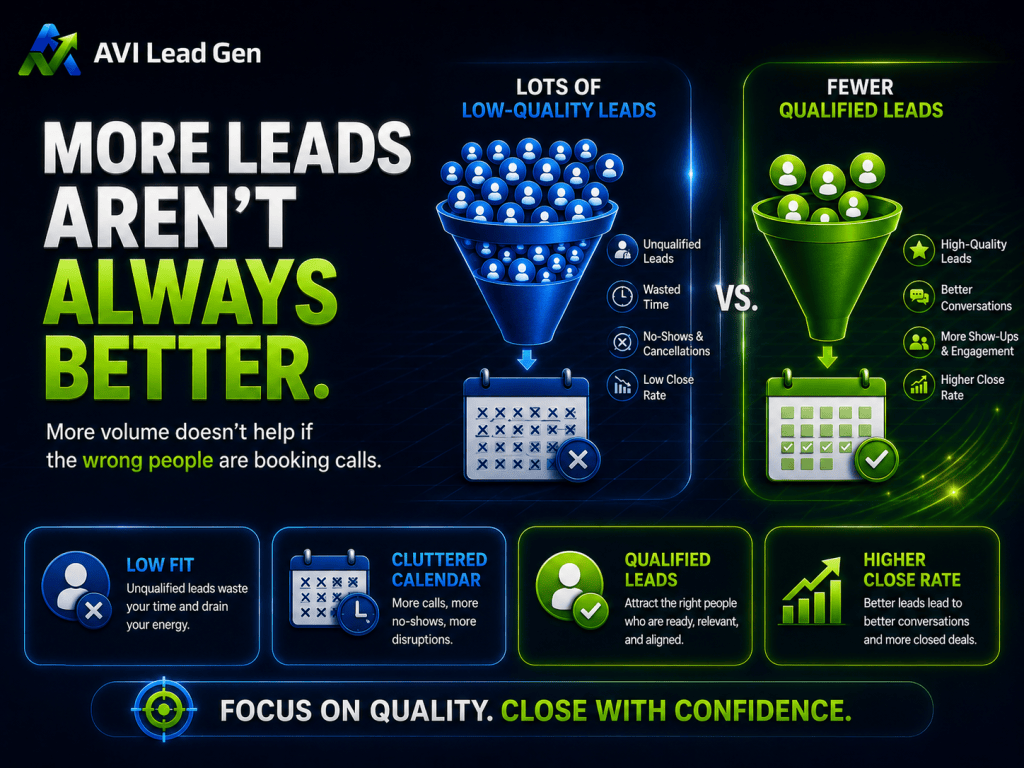
More leads can be useful, but only when those leads have a real chance of becoming customers.
If the wrong people are filling out your forms and booking calls, more lead volume can actually make the business feel busier without making it more profitable.
That’s a frustrating place to be.
You’re responding to inquiries.
You’re taking calls.
You’re answering questions.
You’re sending information.
You’re following up.
But the conversations don’t turn into enough real opportunities.
That usually creates one of two reactions.
Some businesses assume they need more traffic. Others assume their sales process is broken. Either one could be true, but there’s another possibility:
The business may not be qualifying leads early enough.
More traffic won’t fix an unqualified pipeline. More form submissions won’t help if the wrong people are asking for help. More booked appointments won’t create revenue if the calendar is full of poor-fit conversations.
A strong lead generation system doesn’t just ask, “How do we get more people to raise their hand?”
It also asks, “Which people should move forward, and what should happen next?”
That’s where automatic lead qualification becomes valuable.
[Internal link: lead generation bottlenecks → The 7 Most Common Lead Generation Bottlenecks That Stop Small Business Growth]
[Internal link: sales conversion → How to Turn Booked Appointments Into Paying Customers]
What Makes a Lead Qualified?
A qualified lead is not just someone who filled out a form.
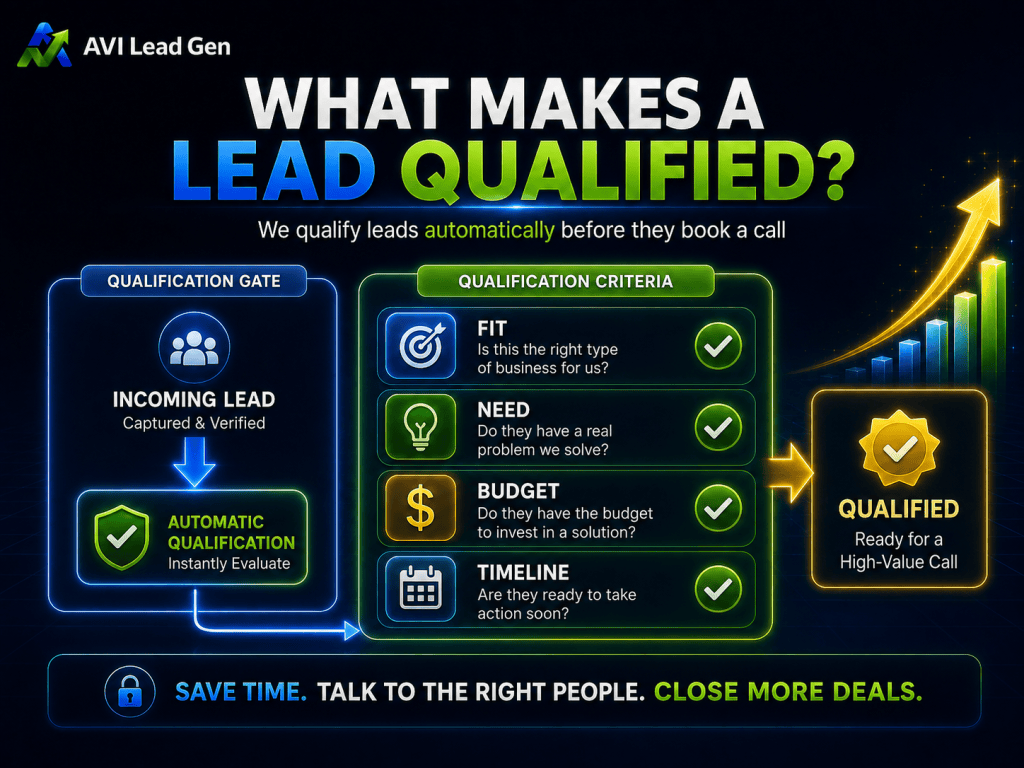
A qualified lead is someone who appears to have a real problem your business can solve, enough interest to take the next step, and enough fit to justify a sales conversation.
The exact definition depends on your business, but most qualified leads share a few common traits.
They have a real problem.
The person should be dealing with an issue your business actually helps solve. If they’re looking for something outside your offer, they may still be a lead, but they’re probably not a qualified one.
They have intent.
A qualified lead is not just browsing. They’re showing some level of interest in solving the problem, whether that means requesting a consultation, asking about a service, downloading a relevant resource, or clicking a booking link.
They have a reasonable timeline.
Some people need help now. Some are planning ahead. Some are just gathering ideas with no real intention to move forward. Timeline matters because it helps determine whether the lead should book now or enter a nurture path.
They have budget or willingness to invest.
You don’t always need to ask for an exact budget, but the lead should have some willingness to invest in solving the problem. If there’s no budget fit at all, the call may not be useful for either side.
They fit the offer.
Even if the person has a problem and wants help, they still need to match the type of customer your offer is designed to serve.
They have a clear next step.
A qualified lead should be ready for some kind of action, whether that’s booking a call, answering a few more questions, reviewing an offer, or entering a follow-up sequence.
Qualification doesn’t have to be perfect. It just needs to help the system make better decisions before the calendar gets involved.
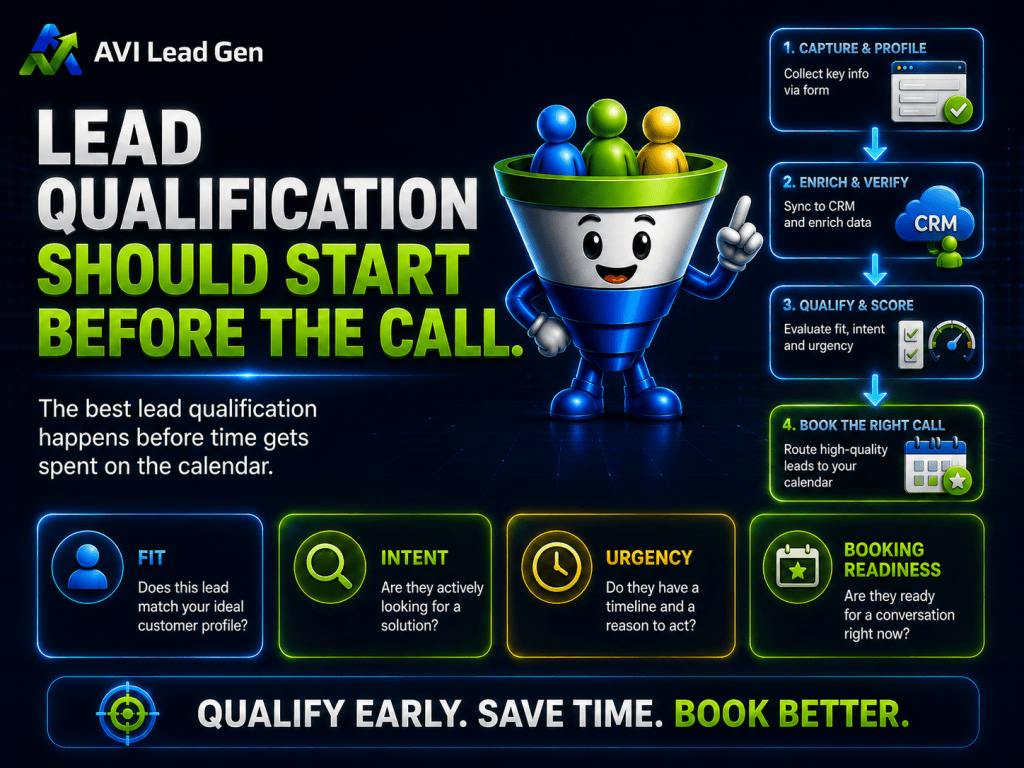
Lead Qualification Should Start Before the Call
If the first real qualification happens during the sales call, your calendar becomes the filter.
That’s a problem.
It means you’re spending live conversation time figuring out whether the person should’ve booked in the first place.
A better system starts qualifying before the call.
That doesn’t mean every lead needs to fill out a long, intimidating application. It means your website, forms, confirmation messages, CRM, tags, and booking paths should work together to understand the lead before they reach the calendar.
The website should make the offer clear.
The form should ask useful questions.
The CRM should organize the lead.
The automation should tag or route the person based on their answers.
The booking path should appear when the next step makes sense.
This helps protect your time and improves the prospect’s experience.
A strong-fit lead doesn’t have to wait around for someone to manually sort through an inbox. They can move forward quickly.
A mid-fit lead doesn’t have to be ignored. They can receive helpful follow-up until they’re ready.
A poor-fit lead doesn’t have to book a call that won’t help either side. They can be redirected to a better resource or filtered out politely.
That’s the point of automatic qualification.
It helps each lead get the next step that matches where they actually are.

A Realistic Example
Imagine a small business gets 30 website leads in a month.
At first, that sounds like a good month.
Ten of those leads book calls. But after the calls happen, the owner notices a problem.
Only two were serious opportunities.
Three were looking for something the business doesn’t offer.
Two weren’t ready to invest.
One wanted free advice.
Two didn’t really understand what the service was.
The owner starts thinking, “We need to get better at closing.”
Maybe that’s partly true.
But the bigger issue may have happened before the sales calls.
The wrong leads were allowed to book too easily.
Now imagine the same 30 leads going through a better qualification system.
The form asks stronger questions.
The website makes the offer clearer.
The CRM tags leads based on service interest, urgency, and fit.
High-fit leads receive the booking link right away.
Mid-fit leads receive a helpful nurture sequence.
Low-fit leads receive a resource but don’t get immediate calendar access.
Poor-fit leads are politely redirected.
The business gets notified when a strong lead comes in.
The number of leads didn’t change.
The quality of the sales conversations did.
That’s why lead qualification matters. It doesn’t just save time. It helps the business focus more energy on the opportunities that actually have a chance to become customers.
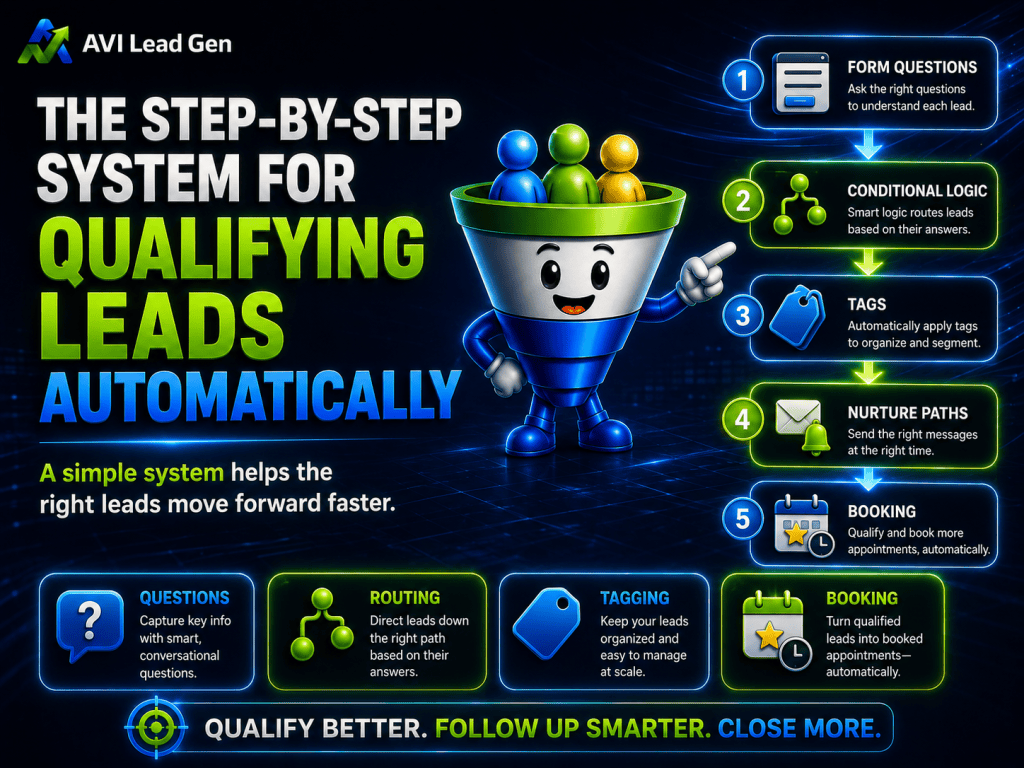
The Step-by-Step System for Qualifying Leads Automatically
Automated lead qualification doesn’t need to feel cold or complicated.
The goal is to create a better path for each person based on what they need, how ready they are, and whether they’re a fit for the offer.
A good system should help answer a simple question:
What should happen next for this lead?
Here’s how to qualify leads automatically using our process.
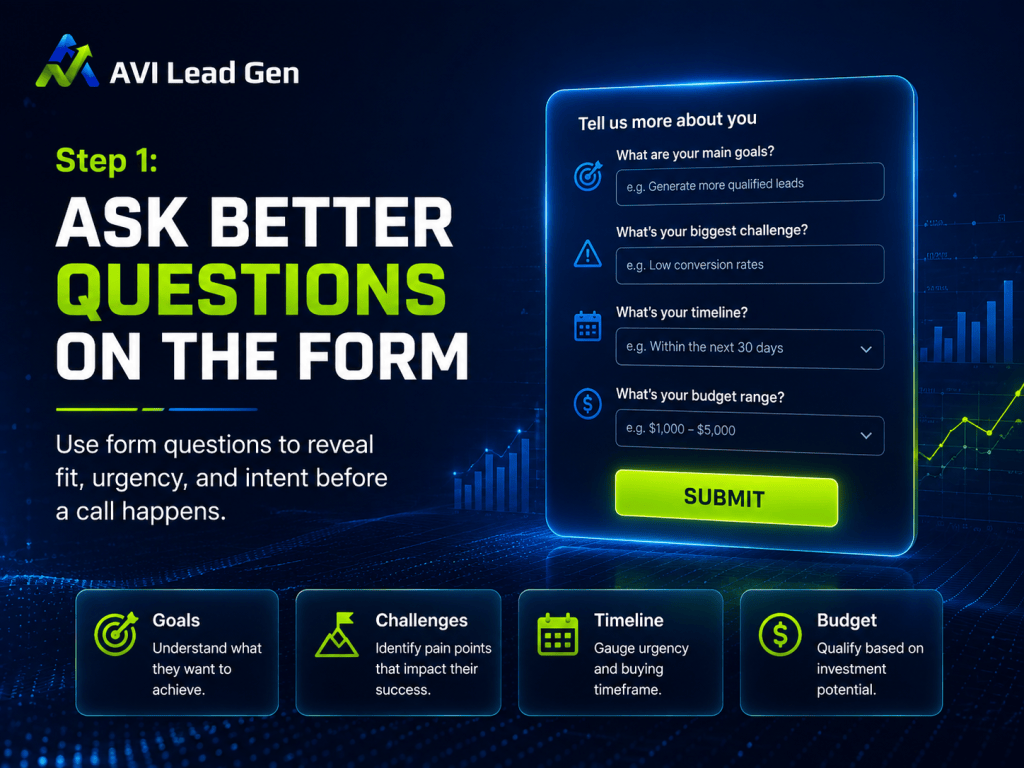
Step 1: Ask Better Questions on the Form
The form is one of the first places qualification can happen.
A weak form usually asks for the basics:
Name.
Email.
Phone.
Message.
That may be enough for a general contact form, but it doesn’t always give the business enough context to qualify the lead.
A stronger lead qualification form asks questions that help you understand the person’s situation.
Questions might include:
What are you trying to improve?
What’s your biggest challenge right now?
Which service are you most interested in?
How soon are you looking to get started?
Have you tried solving this before?
What budget range makes sense for this project or service?
What would make this a successful outcome?
You don’t need to ask every question on every form.
The right questions depend on the offer.
A simple lead magnet form should stay simple. A consultation request can ask for more context. A high-value service inquiry can usually ask more qualification questions because the lead is showing stronger intent.
The key is balance.
Ask too little, and you won’t have enough information to route the lead well. Ask too much, and people may abandon the form.
The goal is to ask enough to understand fit, intent, urgency, and next step.
[Internal link: website form follow-up → What Happens After a Lead Fills Out Your Website Form?]
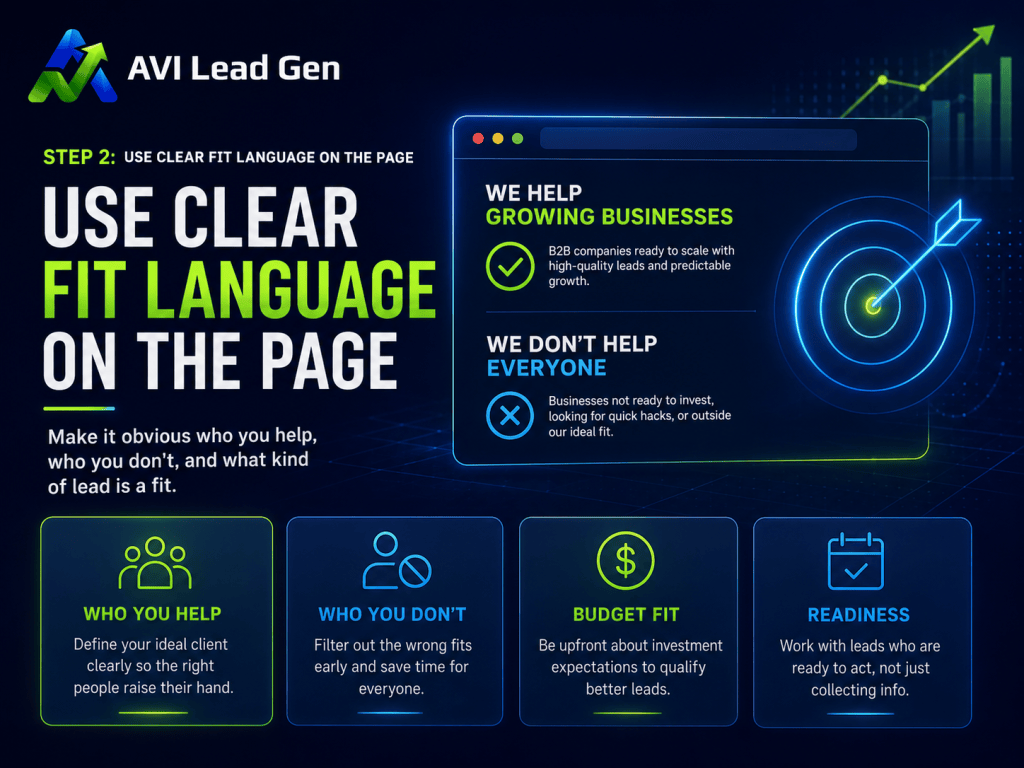
Step 2: Use Clear Fit Language on the Page
Lead qualification starts before the form.
The page itself should help people understand whether the offer is right for them.
If your website copy is too vague, you’ll attract vague inquiries.
That’s why fit language matters.
Your page should make it clear:
Who the service is for
What problem it solves
What kind of business or buyer is a good fit
What the next step looks like
What the service does not include, when needed
What level of commitment may be required
This doesn’t mean your page has to sound harsh or exclusive.
It means visitors should be able to recognize whether they’re in the right place.
For example, a vague CTA like “Contact Us” doesn’t qualify much.
A stronger CTA might say:
“Book a strategy call if your business is getting website leads but needs a better system for follow-up, booking, and conversion.”
That language does more than invite action. It frames the type of person who should take that action.
Clear fit language helps reduce poor-fit inquiries before they ever reach the form.
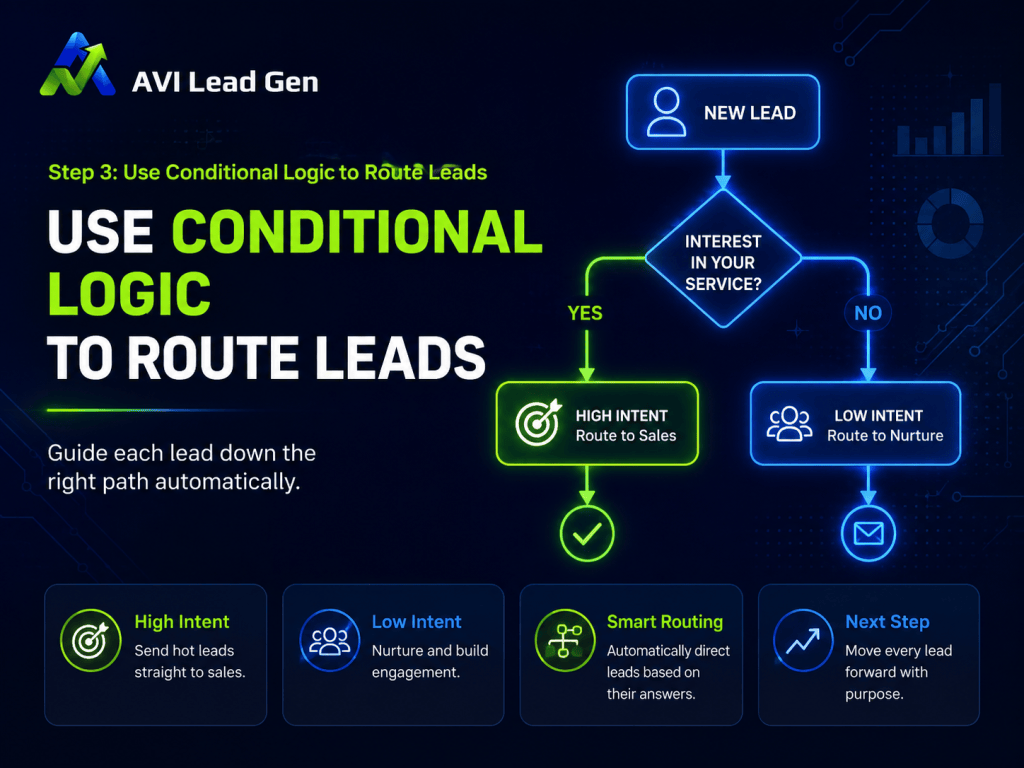
Step 3: Use Conditional Logic to Route Leads
Conditional logic helps your system respond differently based on how someone answers.
This is where automatic lead qualification starts to feel like a real system.
Not every lead should see the same confirmation message. Not every lead should receive the same follow-up. Not every lead should be sent directly to the calendar.
Conditional logic can help route leads based on answers like:
Service interest
Timeline
Budget range
Business type
Urgency
Location
Problem type
Readiness to move forward
For example:
A high-fit lead with a strong timeline may be sent directly to a booking page.
A good-fit lead who isn’t ready yet may receive a nurture sequence.
A poor-fit lead may receive a helpful resource instead of a calendar link.
A lead with incomplete answers may receive a follow-up email asking for more information.
This makes the system more useful for both sides.
The business doesn’t have to treat every form submission the same. The lead doesn’t get pushed into a step that may not make sense.
The system helps decide the next move.
[Internal link: lead capture and booking → Lead Capture & Appointment Booking Systems]
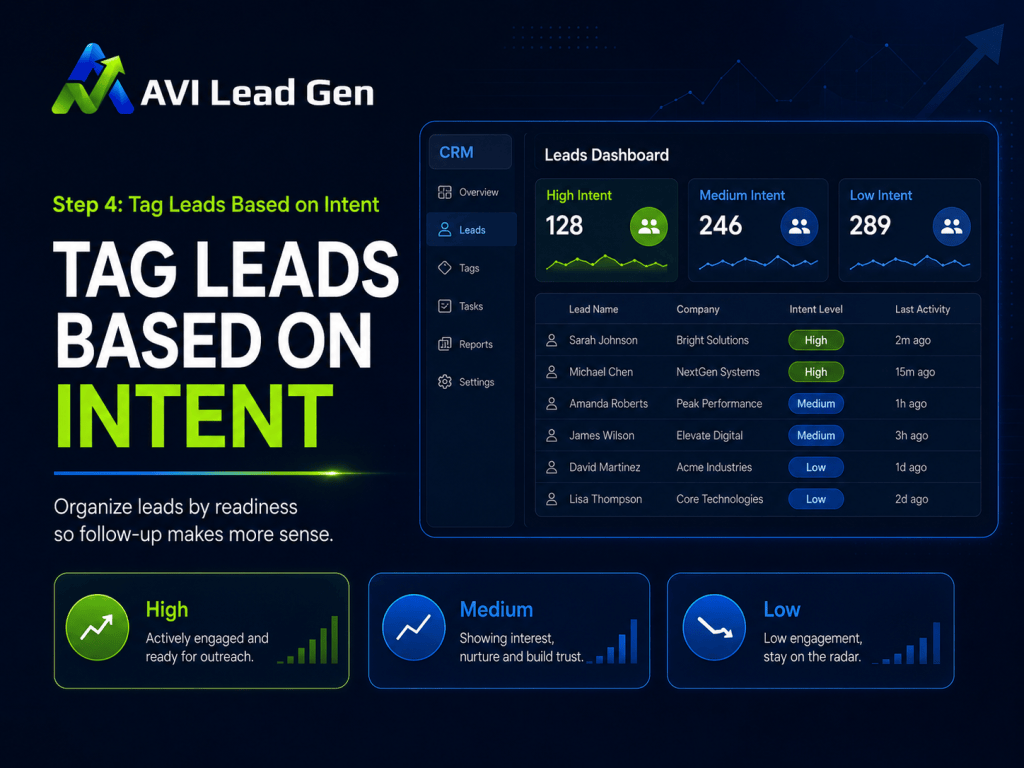
Step 4: Tag Leads Based on Intent
Once a lead enters the CRM, tags can help organize what kind of lead they are.
Tags don’t need to be complicated.
A small business might start with simple intent tags like:
High intent
Medium intent
Low intent
Service interest
Booked call
Not ready yet
Needs follow-up
Poor fit
Requested pricing
Downloaded resource
The point is not to create a messy CRM full of unused labels.
The point is to make the lead easier to understand and follow up with.
For example, a person who fills out a consultation request and says they want to start this month may get tagged as high intent.
A person who downloads a guide but doesn’t request a call may get tagged as low or medium intent.
A person who clicks a booking link but doesn’t schedule may get tagged for follow-up.
These tags help your system know what to do next.
They can trigger follow-up sequences, internal notifications, reminders, or booking invitations.
They also help the business review the pipeline without digging through every individual form entry.
Good tagging turns scattered activity into organized lead movement.
[Internal link: CRM automation → Lead Follow-Up Automation]
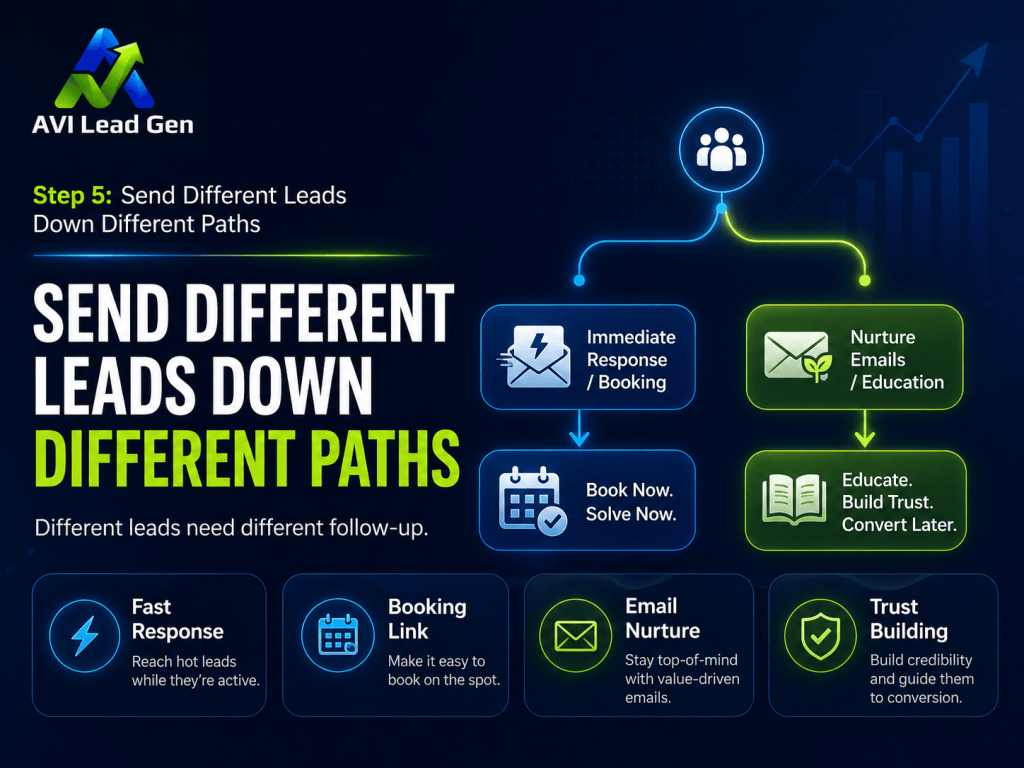
Step 5: Send Different Leads Down Different Paths
A strong qualification system doesn’t treat every lead the same.
That’s the whole point.
Different leads need different next steps.
High-intent leads should move quickly.
If someone appears to be a good fit, has a real problem, and wants help soon, the system should make booking easy. These leads may need a direct booking link, quick internal notification, and faster personal follow-up.
Mid-intent leads may need more education.
They may be interested, but not quite ready. They may need to understand the problem better, compare options, or see why the service matters. These leads can receive helpful emails, relevant blog posts, or a later invitation to book.
Low-intent leads should not be ignored.
They may not be ready now, but they can still be worth nurturing. A newsletter, helpful resource, or slower follow-up sequence can keep the relationship alive.
Poor-fit leads should not clog the calendar.
If someone clearly needs something outside your offer, they may need a polite redirect, a resource, or a simple message explaining that the service may not be the right fit.
This approach keeps the calendar focused on better opportunities.
It also improves the lead experience because people get a next step that matches where they are.
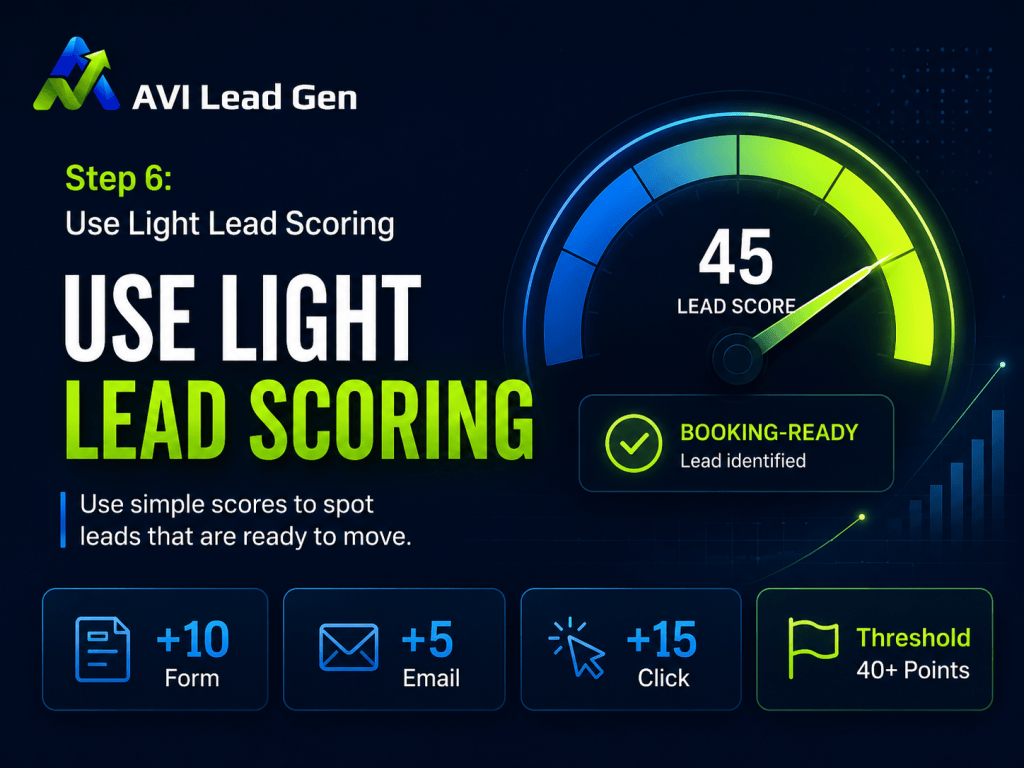
Step 6: Use Light Lead Scoring
Lead scoring can be useful, but it doesn’t need to become a complicated mess.
For many small businesses, simple scoring is enough.
The idea is to assign value to actions or answers that suggest stronger intent.
For example:
Requested a consultation: higher score
Selected an urgent timeline: higher score
Clicked a booking link: higher score
Opened several follow-up emails: medium score
Downloaded a general resource: lower score
Selected a poor-fit service need: lower score
No engagement after form submission: lower score
The goal isn’t to make the CRM feel like enterprise software.
The goal is to help the business prioritize attention.
If two leads come in at the same time, the system should help identify which one likely deserves faster follow-up.
Lead scoring can also help trigger automation.
A lead above a certain score might receive a booking invitation.
A lead with a lower score might receive education first.
A lead who gains points over time through engagement might move from nurture to sales-ready.
Light lead scoring helps your system notice when interest is increasing.

Step 7: Offer Booking at the Right Moment
Booking should feel like the next logical step.
Not too soon.
Not too late.
If you give every visitor immediate access to the calendar, you may end up with too many poor-fit calls.
If you hide the calendar too much, strong leads may lose momentum.
The goal is to offer booking when the lead has shown enough fit or intent to justify a conversation.
That may happen right after a strong consultation form submission.
It may happen after someone answers qualification questions.
It may happen after a nurture email explains the offer more clearly.
It may happen after a lead clicks through several high-intent pages or emails.
The right timing depends on the business.
But the principle stays the same:
Don’t make every lead book immediately. Don’t make every lead wait either.
Use qualification to decide when booking makes sense.
[Internal link: booked appointments → How to Turn Website Leads Into Booked Appointments]
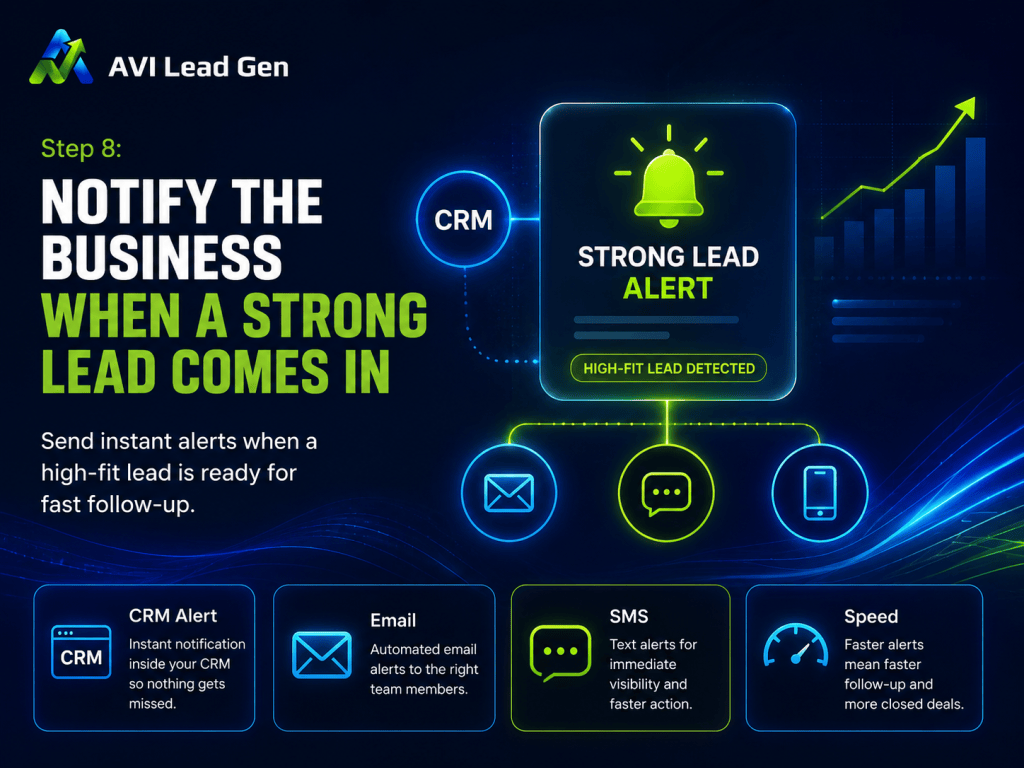
Step 8: Notify the Business When a Strong Lead Comes In
Automatic qualification should not only help the lead.
It should also help the business act quickly.
When a strong lead comes in, the right person should know.
A useful notification might include:
The lead’s name
Contact information
Service interest
Timeline
Budget range, if collected
Main challenge
Source or campaign
Qualification tag
Recommended next step
This helps the business respond with context.
Instead of seeing a generic form notification, the owner or team member can quickly understand why the lead matters and what should happen next.
That matters because speed still counts.
If a high-fit lead raises their hand, the system should not let that opportunity sit unnoticed in an inbox.
The stronger the lead, the more important fast follow-up becomes.
[Internal link: lead response time → How Fast Should You Respond to a New Lead?]
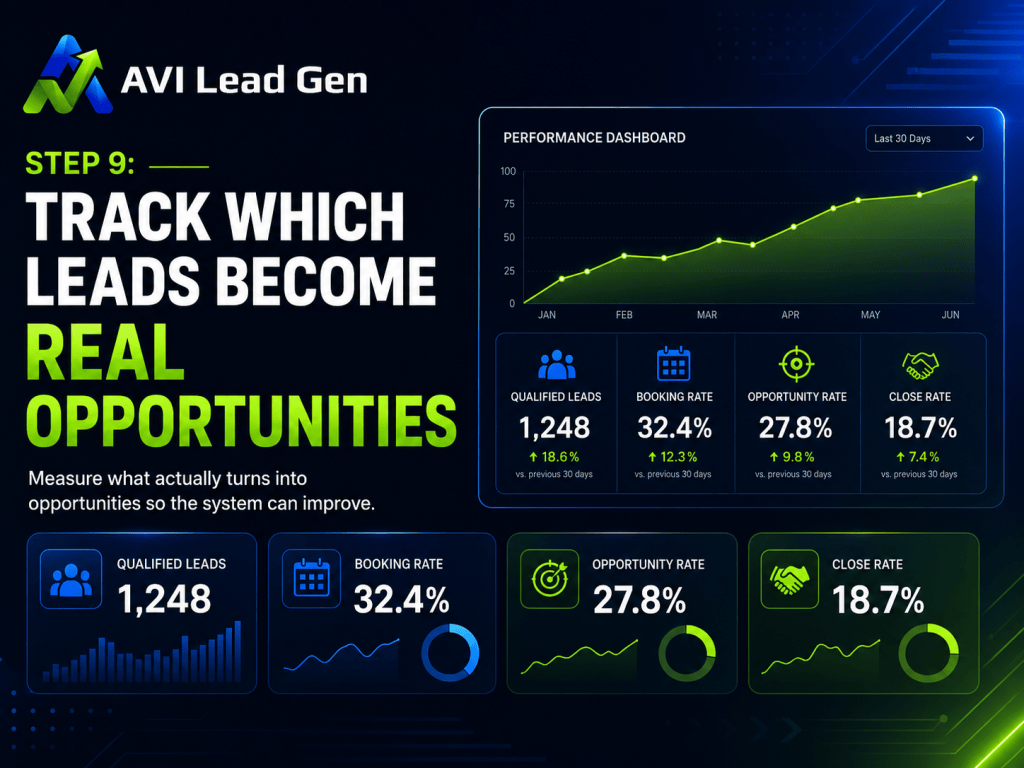
Step 9: Track Which Leads Become Real Opportunities
Lead qualification should not be based on guesswork forever.
The system should track what happens after leads are qualified and routed.
Useful numbers include:
Form submissions
Qualification tags
Lead scores
Booking link clicks
Calls booked
Calls completed
Qualified opportunities
Proposals sent
Customers won
Deals lost
Follow-up completed
These numbers help you see whether your qualification system is working.
If many high-intent leads never book, the booking path may need work.
If many booked calls are still poor fit, the form questions may need to be stronger.
If good-fit leads are not closing, the issue may be sales process, offer clarity, or follow-up.
If low-intent nurture leads eventually book, your nurture system may be doing its job.
Tracking keeps you from guessing.
It shows whether the system is helping the right people move forward.
[Internal link: lead generation audit → Do Your Own Lead Generation System Audit in 30 Minutes]
[Internal link: conversion tracking → How to Track and Improve Your Lead Generation Funnel]
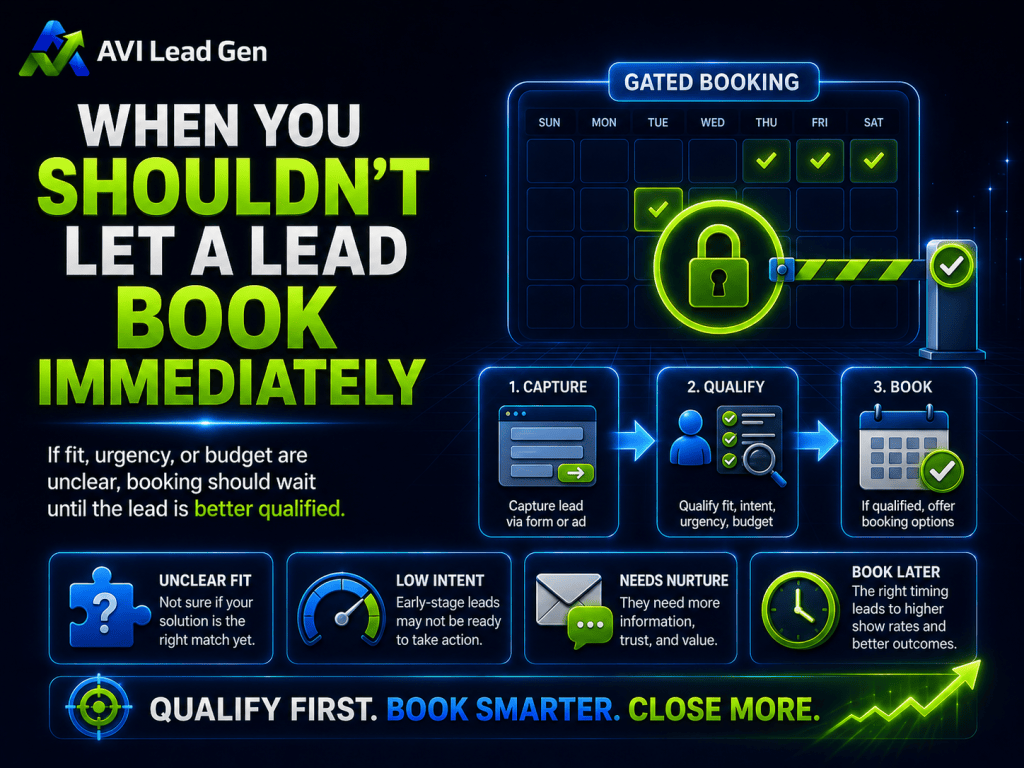
When You Shouldn’t Let a Lead Book Immediately
Not every lead should be sent straight to the calendar.
That doesn’t mean the lead is worthless. It means the call may not be the right next step yet.
You may not want to offer immediate booking when:
The lead doesn’t match your service
They’re asking for something outside your offer
They don’t meet basic budget fit
They’re only looking for free advice
They gave incomplete or confusing answers
They’re not ready to make a decision
They’re too early in the research process
They don’t match your location or service area
They selected an unsupported service need
In these cases, the system can still be helpful.
It can send a resource, ask a follow-up question, offer a different path, or place the lead into a nurture sequence.
This protects your calendar without ignoring the person.
The goal is not to reject leads harshly.
The goal is to avoid forcing every inquiry into the same sales conversation.

Where Automation Helps
Automation helps make qualification consistent.
It can make sure the right steps happen even when the business is busy.
Automation can help with:
Form routing
Conditional logic
CRM tags
Lead scoring
Booking access
Follow-up sequences
Internal alerts
Nurture paths
Status updates
Source tracking
This is where automation is especially valuable for small businesses.
Without automation, lead qualification often depends on someone manually reading every form, deciding what to do, remembering to follow up, and updating the CRM.
That may work at low volume, but it’s easy for leads to slip through the cracks.
Automation helps create a repeatable process.
It doesn’t have to replace human judgment. It simply handles the parts of the process that should happen consistently.

Where Human Judgment Still Matters
Automation can sort, tag, route, and score leads.
But it can’t understand every situation perfectly.
Human judgment still matters when a lead is unusual, high-value, unclear, or asking a specific question.
A person should still review strong opportunities.
A person should still answer detailed questions.
A person should still decide how to handle edge cases.
A person should still bring empathy and context to important conversations.
The best qualification system uses both.
Automation handles the structure.
Human follow-up handles the nuance.
That balance matters because lead qualification should not make the business feel robotic. It should make the process clearer, faster, and more useful.
How Lead Qualification Improves Sales Conversion
Better qualification can improve the quality of the sales conversation.
When better-fit people book calls, discovery is easier. The prospect understands the offer better. The problem is clearer. The conversation has more direction.
That doesn’t guarantee every call becomes a customer.
But it does give the sales process a better chance.
Qualified calls tend to be more productive because the prospect is closer to the right stage. They’re not just randomly asking questions. They’re more likely to have a real problem, a reason to solve it, and a better understanding of the next step.
This connects directly to appointment-to-customer conversion.
If your calendar is filled with poor-fit calls, your close rate will usually suffer.
If your calendar is filled with stronger-fit calls, the sales process has more room to work.
Lead qualification helps improve what happens before the call so the call itself can be more useful.
[Internal link: appointment-to-customer conversion → How to Turn Booked Appointments Into Paying Customers]

The Bottom Line
Lead generation isn’t just about getting more people into the funnel.
It’s about helping the right people move forward.
If every lead gets the same path, your system may create more noise than opportunity. Some leads are ready for a call. Some need nurture. Some need more information. Some should not book at all.
Automatic lead qualification helps sort those paths before your calendar gets involved.
That means fewer poor-fit calls, better follow-up, clearer CRM organization, and a stronger path from inquiry to conversation.
More leads can help.
But better-qualified leads can make the whole system work smarter.
Ready to Qualify Leads Before They Book?
AVI Lead Gen helps small businesses build lead generation systems that connect website forms, CRM automation, lead qualification, appointment booking, follow-up, and conversion tracking.
If your calendar is filling up with calls that don’t turn into real opportunities, the issue may not be traffic.
It may be your qualification system.
Ready to stop guessing and build a lead generation system that works around the clock?
AVI Lead Gen helps small businesses capture leads, automate follow-up, and turn more website visitors into real opportunities.

FAQ
How do you qualify leads before they book a call?
You qualify leads before they book a call by asking better form questions, using clear fit language on the page, tagging leads in the CRM, routing leads based on their answers, and offering booking only when the next step makes sense. The goal is to understand fit, intent, urgency, and readiness before the calendar gets involved.
Should every lead book a call?
Not always. Some website leads are ready for a call, but others may need more information, nurturing, or filtering first. If every lead can book immediately, your calendar may fill with poor-fit conversations that don’t turn into real opportunities.
What questions should a lead qualification form ask?
A lead qualification form can ask what the person is trying to improve, what challenge they’re facing, which service they’re interested in, how soon they want to get started, whether they’ve tried solving the problem before, and what budget range makes sense. The exact questions should match the offer and the stage of the lead.
What is automated lead qualification?
Automated lead qualification is the process of using forms, CRM tags, conditional logic, lead scoring, follow-up automation, and booking rules to sort leads before they talk to the business. It helps determine whether a lead should book now, receive nurture emails, answer more questions, or be filtered out.
How does lead scoring work for small businesses?
Lead scoring gives value to actions or answers that suggest stronger interest or fit. For example, requesting a consultation, clicking a booking link, selecting an urgent timeline, or engaging with follow-up emails may increase a lead’s score. The score helps the business prioritize follow-up and decide when booking makes sense.
Can automation improve lead quality?
Automation can improve lead quality by routing people to the right next step based on their answers and behavior. It can tag high-intent leads, nurture lower-intent leads, notify the business about strong opportunities, and prevent poor-fit leads from automatically filling the calendar.
When should a lead be sent to a booking page?
A lead should usually be sent to a booking page when they show enough fit, intent, and readiness for a sales conversation. That may happen after a strong consultation form submission, a qualifying answer, a booking link click, or engagement with follow-up content.
How does lead qualification improve close rates?
Lead qualification can improve close rates by helping better-fit prospects reach the calendar. When calls are filled with people who have a real problem, stronger intent, and better offer fit, the sales conversation becomes clearer and more productive.


