

Your contact form can be busy while your business stays stuck.
Inquiries arrive. A few appointments get booked. You spend time answering questions and sending proposals. But the activity doesn’t seem to produce much progress.
When you have to ask, why are leads not converting, the natural reaction is to ask for more of them.
Sometimes you do need more opportunities. But more inquiries won’t fix a missed response, an unclear offer, or a sales conversation that ends without a next step.
Leads aren’t growth. Leads are only the starting point.
If you’re getting leads but no sales, look at what happens after someone reaches out. If you’re winning customers but still not growing, look at what happens after they buy.
Those are different problems. Treating them as the same one can send you toward the wrong solution.
The goal isn’t to keep your pipeline busy. It’s to understand the system behind the leads, so you can improve the part that’s preventing good opportunities from moving forward.
More Leads Don’t Always Mean More Growth

Before changing your marketing, identify which problem you’re trying to solve.
If very few suitable people contact your business, you may need better traffic, clearer messaging, or a website that makes taking the next step easier. That’s a different starting point from a business that already receives relevant inquiries.
If inquiries arrive but don’t become customers, investigate qualification, follow-up, booking, and sales conversations.
If customers sign up but the business still feels stuck, review onboarding, retention, the value of the work, and whether new business is replacing what you’re losing.
For example, a bookkeeping firm receiving mostly requests for services it doesn’t offer has a different problem from a firm receiving suitable monthly bookkeeping inquiries that nobody follows up with.
Both owners might say, “Our leads aren’t working.”
Only one should start by changing who the marketing attracts.
If your actual problem is a lack of inquiries, start by learning how to fix a website that isn’t generating leads. The rest of this article focuses on what to inspect once those inquiries already exist.
A Realistic Example: Where Website Inquiries Stop Moving
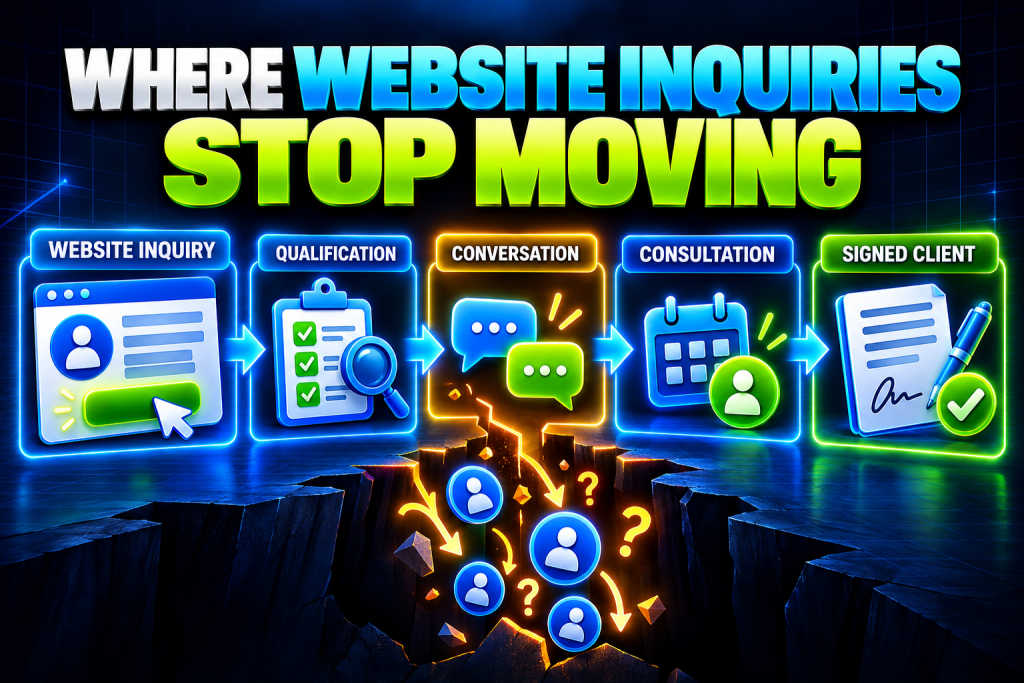
Imagine a bookkeeping firm reviewing one group of website inquiries after an eight-week follow-up window.
The following numbers are hypothetical. They aren’t AVI client results, industry benchmarks, or expected outcomes.
Each row follows the same group of 30 unique inquiries:
| Stage reached during the review window | Number of inquiries |
| Submitted an inquiry | 30 |
| Met the firm’s defined service-fit criteria | 18 |
| Had a two-way conversation with the firm | 12 |
| Booked a consultation | 9 |
| Attended a consultation | 6 |
| Signed up as clients | 2 |
Looking only at the first and last rows, the owner might conclude that the leads were poor.
But the records raise several different questions.
Why didn’t six suitable prospects reach a two-way conversation? Were they contacted? Did the message reach them? Was there a clear reason to reply?
Why didn’t three booked consultations happen? Were they canceled, rescheduled, or missed?
What happened after the six completed consultations? Did prospects decline, need more time, receive an unsuitable proposal, or leave without an agreed next step?
The numbers show where to investigate. They don’t establish the cause.
The firm’s lead-to-sale conversion rate for this group is about 6.7%: two clients from 30 inquiries. Its attended-consultation-to-client rate is about 33.3%: two clients from six completed consultations.
Those percentages answer different questions. Neither tells the owner what to fix without the surrounding records.
And any opportunity still being considered at the end of the review window should remain open, not automatically be labeled lost.
Six Reasons Leads Aren’t Turning Into Lasting Growth
1. Poor Lead Quality: Separate Fit From Readiness
Not every inquiry deserves the same next step. But that doesn’t mean every person who asks about price or isn’t ready to buy is a bad lead.
Separate fit from readiness.
A prospect might need a service you don’t provide. Another might be an excellent fit but unable to start until next quarter. A third might have an immediate problem and want a consultation this week.
For a bookkeeping firm, someone asking only for an individual tax return may not fit a monthly bookkeeping offer. A contractor planning to change bookkeepers after year-end could fit well but need a later follow-up.
Those situations call for different responses.
Define what makes someone suitable for your service, then capture enough information to choose the next step. That might mean booking a call, answering a question, arranging a future follow-up, or explaining that you’re not the right provider.
You can qualify leads before they book a call without turning the process into an obstacle course.
If most inquiries consistently fall outside your service or customer profile, review how you attract more qualified traffic. Don’t assume a qualification form can repair fundamentally mismatched marketing.
2. Slow or Inconsistent Follow-Up: Confirmation Isn’t a Conversation
A confirmation email tells someone their inquiry arrived.
It doesn’t necessarily answer their question, establish a relationship, or move them toward a decision.
Consider a prospect who asks whether your bookkeeping service can help with job costing. An automated “Thanks, we’ll be in touch” acknowledges the form, but the real conversation hasn’t started.
Someone still needs to review the request, answer appropriately, and make the next step clear.
Your lead follow-up process should identify who owns the inquiry, when they should respond, and what happens if the prospect doesn’t reply. An automated message can support that process. It shouldn’t hide the fact that nobody has taken responsibility.
Review what happens after a lead fills out your website form. Check the actual path from submission to notification, CRM record, assigned owner, and meaningful response.
Then assess how quickly you respond to new leads. Set a response expectation your team can meet, including a clear message about after-hours inquiries.
A lead marked “email sent” isn’t the same as a lead whose question has been handled.
3. No Clear Sales Process: Give Each Conversation a Next Step
Some businesses get appointments but struggle to move suitable prospects toward a decision.
That doesn’t automatically mean the sales calls are bad. Fit, timing, budget, trust, and the offer itself may all need investigation.
Still, the conversation is worth reviewing.
A useful consultation should help you understand the prospect’s situation, why they’re considering a change, what they need, and whether your service fits.
For a bookkeeping firm, that might mean establishing whether the prospect needs ongoing monthly support, cleanup work first, or something outside the firm’s scope.
The call shouldn’t end with both sides making assumptions about what happens next.
If you’re preparing a proposal, explain what it will cover and when it will arrive. If the prospect needs another decision-maker involved, agree on the next conversation. If they aren’t ready, record an appropriate follow-up date.
To turn booked appointments into paying customers, start by giving suitable prospects a clear decision process. That isn’t the same as pushing everyone toward a sale.
4. Weak Offer Positioning: Make the Value Understandable
Sometimes the prospect understands what you sell but not why it fits their situation.
“We provide bookkeeping” names a service.
“We help contractors keep their monthly books organized and understand job profitability” explains who the service is for and what it helps them do.
The second statement still needs accurate scope and evidence behind it. But it gives the prospect something more useful to evaluate than a service label.
The same issue applies to AVI. “We build websites” doesn’t explain the connected lead capture, follow-up, qualification, booking, and tracking work surrounding the website.
Review whether your website, consultation, and proposal describe the same offer.
For example, if the website promotes ongoing bookkeeping but the proposal unexpectedly starts with a substantial cleanup project, explain why that work comes first and what it includes.
You don’t need to promise a dramatic result. You need to make the service, its relevance, and the next step understandable.
5. No Tracking or Visibility: Follow Leads Beyond the Form
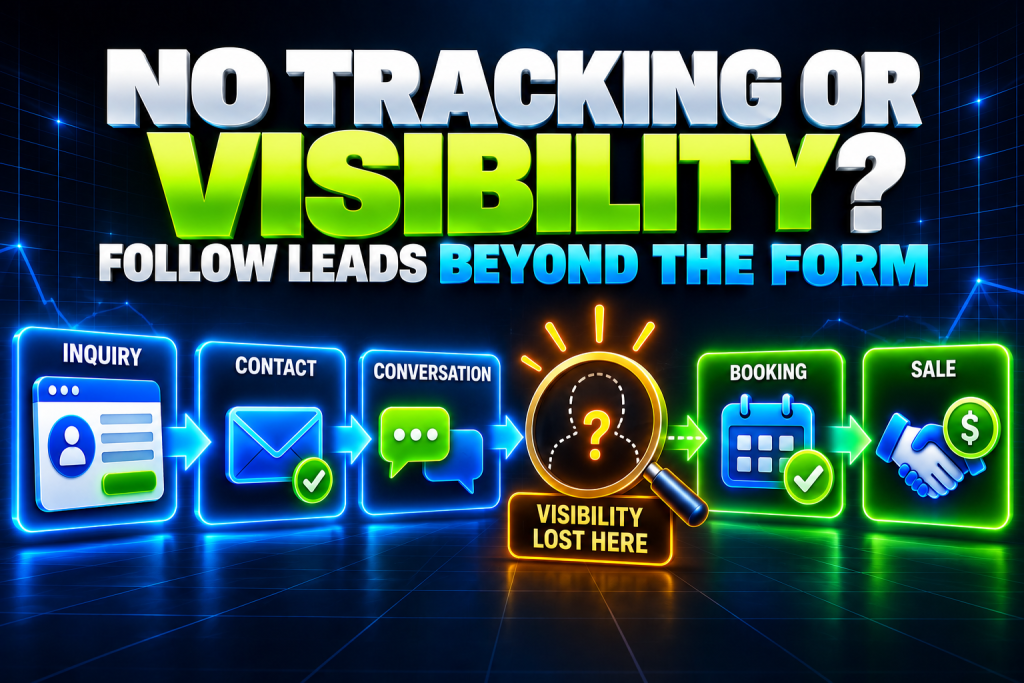
A form-submission count tells you how many inquiries arrived.
It doesn’t tell you whether those inquiries were suitable, contacted, booked, attended, or converted.
Start with a manageable record for each opportunity: source, inquiry date, fit, assigned owner, current stage, next action, and outcome. Where relevant, distinguish a booked appointment from one that actually happened.
That distinction matters when you’re diagnosing a problem.
Nine booked appointments and six completed appointments aren’t interchangeable. Neither is an unanswered inquiry interchangeable with a prospect who clearly declined.
When reviewing your lead conversion rate, name the starting and ending stages. “Clients divided by all inquiries” answers a different question from “clients divided by attended consultations.”
Use consistent definitions and review periods. Otherwise, a change in reporting can look like a change in performance.
You don’t need a complicated dashboard to begin. You need reliable records that help you track and improve your lead generation funnel without guessing what happened between stages.
6. Poor Onboarding and Retention: Don’t Lose the Value After the Sale
This is a different problem from a lead failing to convert.
The prospect bought. Now you need to deliver the service and maintain the relationship.
For a bookkeeping firm, the next steps might involve access to records, required documents, agreed responsibilities, and a start date. If those steps are unclear, the engagement can stall before the ongoing work begins.
Review what happens after you close a client. The customer should understand what you need, who handles questions, what happens next, and how progress will be communicated.
Then look beyond the number of new clients signed.
Are clients staying? Is agreed work starting? Are fees being collected? Does the service require substantially more work than the scope allows?
A business can keep winning customers while losing others. It can also sign work that doesn’t create the financial progress the owner expected.
More lead generation won’t, by itself, resolve those problems. Keep acquisition and retention connected, but measure them separately.
How to Find What’s Blocking Your Leads From Converting
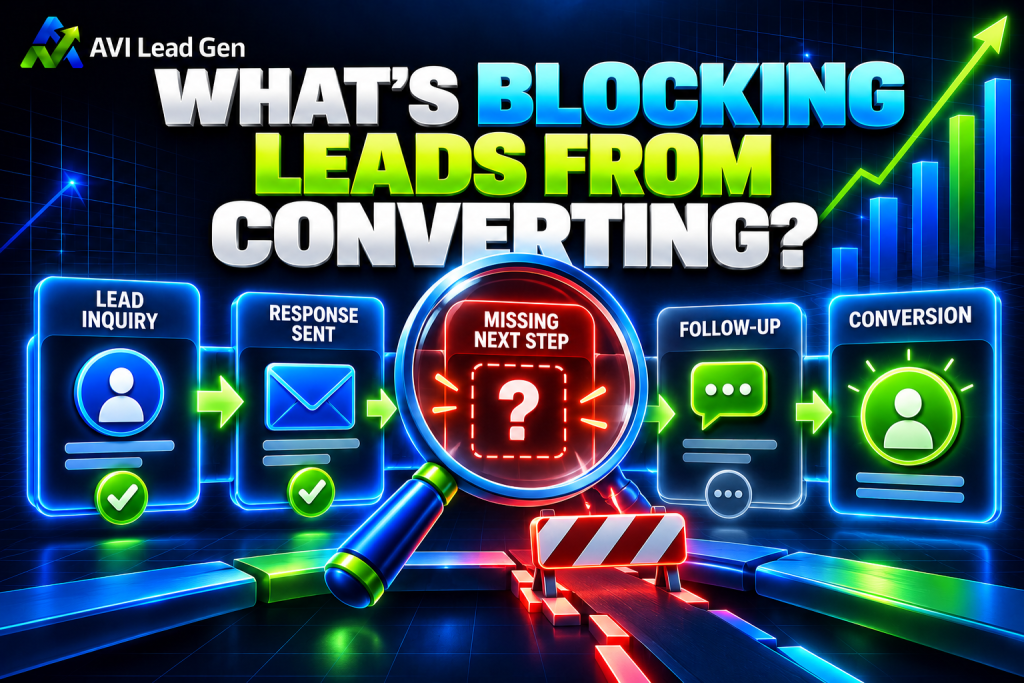
Start with a manageable group of recent inquiries, such as the last 20 or 30. This is a practical review, not enough evidence to establish a universal conversion benchmark.
Read what actually happened to each one.
Check whether it fit your service, who handled it, whether a conversation occurred, and what the next step was. Separate open opportunities from confirmed losses, and record reasons when you know them.
Then use the pattern to choose what to investigate:
| What you’re seeing | What to check | A practical next move |
| Most inquiries don’t fit the service | Traffic sources, offer wording, and qualification criteria | Clarify who the service is for and what information you collect |
| Suitable inquiries don’t reach a conversation | Message delivery, assigned ownership, response quality, and follow-up | Assign an owner and define a meaningful first response |
| Conversations don’t become bookings | Whether a call is appropriate, the invitation, and available appointment options | Make the next step relevant and easy to understand |
| Booked appointments don’t happen | Cancellations, reschedules, confirmation details, and reminders | Clarify attendance and rescheduling instructions |
| Completed consultations don’t become clients | Fit, discovery notes, timing, proposals, objections, and agreed next steps | Improve the specific issue the records reveal |
| New clients arrive but growth stays flat | Onboarding, retention, collected revenue, and delivery requirements | Review what happens after the sale rather than only adding more leads |
Don’t automatically treat the largest numerical drop as the worst problem. Filtering out unsuitable inquiries can protect your time. An apparently smaller gap involving valuable, well-qualified prospects may deserve closer attention.
Choose one change, assign someone to implement it, and record when it went live.
If ownership is unclear, fix ownership. If people repeatedly misunderstand the offer, clarify the offer. If consultations end without an agreed next step, improve that handoff.
Then review later opportunities using the same definitions, allowing enough time for them to progress.
That gives you a more useful starting point than changing your website, buying another tool, and rewriting every email at once.
Frequently Asked Questions
Why are my leads not converting?
Check whether the inquiries fit your service and what happens after they arrive. Suitable prospects may stall before a conversation, booking, attended appointment, or decision. Review the records at each stage instead of assuming that every missed sale is a lead-quality problem.
Can more leads fix slow business growth?
More opportunities can help when insufficient lead volume is the actual constraint. But if you’re getting leads but not growing because suitable inquiries aren’t handled consistently, additional volume won’t fix that process. Identify what’s limiting progress before deciding where to invest.
What’s the biggest reason leads don’t convert?
There isn’t one cause you can safely assume for every business. Poor fit, unclear value, timing, missed follow-up, and an uncertain next step are different possibilities. Use your own inquiry records and prospect feedback to determine which deserves attention.
How do I know where my lead generation system is failing?
Track inquiries through qualification, conversations, bookings, attended appointments, and outcomes. Compare the same group over a clear review period. Then investigate why opportunities stopped moving. Keep open, unsuitable, and lost opportunities separate so the numbers don’t obscure what happened.
How can small businesses turn more leads into customers?
Start by matching the next step to the prospect’s situation. Qualify appropriately, assign ownership, provide a meaningful response, make booking straightforward, and give sales conversations direction. Turning leads into customers requires those pieces to work together, not merely exist as separate tools.
Build a Better System Around the Leads You Already Have
Leads are valuable. But leads alone don’t create growth.
Before chasing more inquiries, make sure you can see what happens to the ones already arriving.
At AVI Lead Gen, we help small businesses connect their WordPress websites, lead capture, CRM, qualification, follow-up, booking, and tracking into one lead generation system.
The goal is to replace disconnected handoffs with a clearer process for moving suitable prospects toward the next step.
Ready to stop guessing about what happens after someone reaches out?